

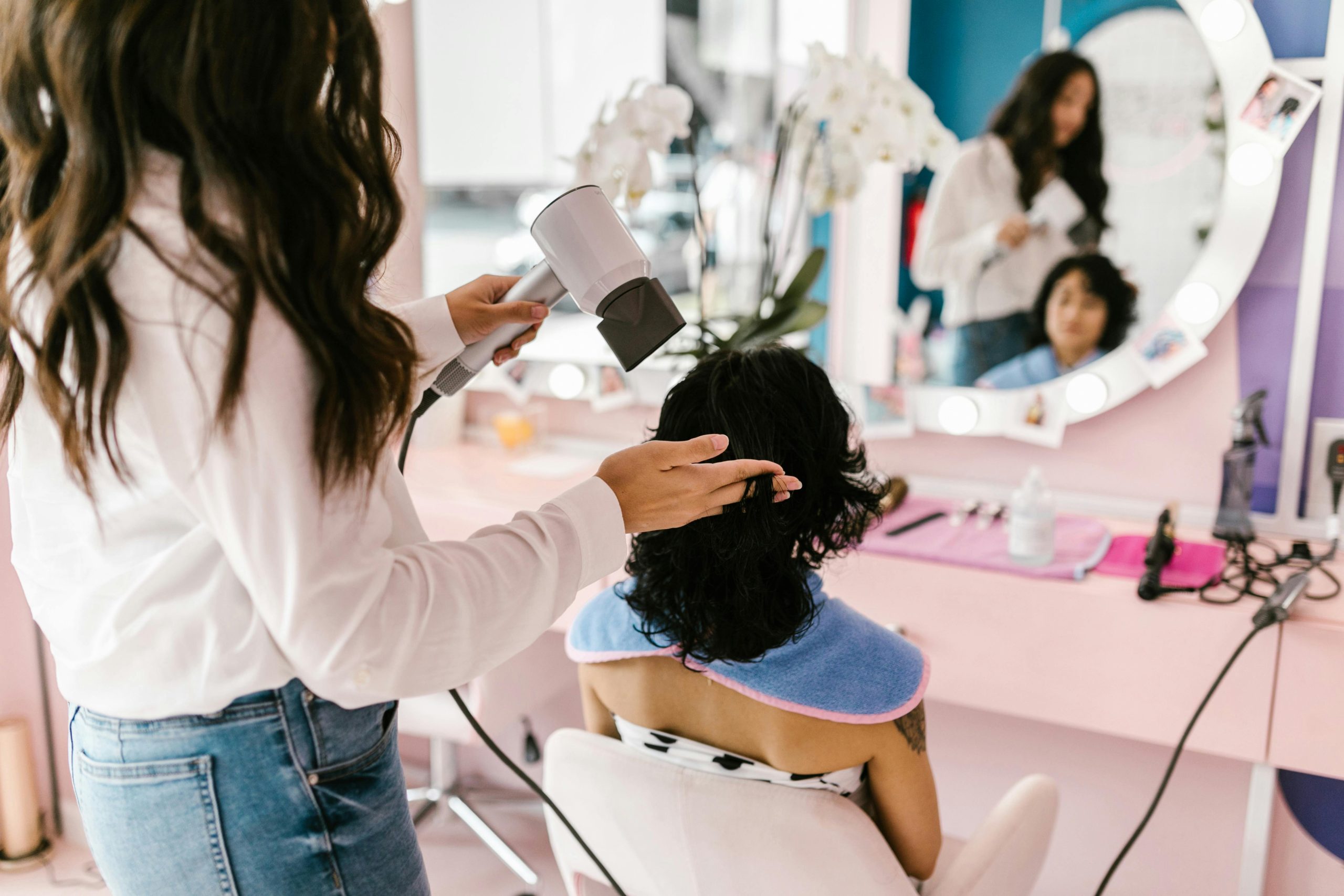
Instead of a doctor’s waiting room, imagine this: while foil sets on a hair color, a stylist quietly walks a client through a simple five-step breast self-exam card and points to a poster about lower-cost screening nearby.
Meanwhile, a barbero, mid-fade, reminds a customer’s spouse that mammograms and breast ultrasound are now covered benefits in accredited facilities.
In these familiar, chatty spaces, where people already swap advice on shampoo and skin care, life-saving conversations can take root.
Breast cancer is the leading cancer by incidence among Filipino women, with 33,079 new cases and 11,857 deaths recorded in 2022, according to the Global Cancer Observatory (GLOBOCAN 2022 / IARC).
Globally there were 2.30 million new female breast cancer cases that year, while Asia accounted for about 985,400 cases, an outsized regional burden, based on World Cancer Research Fund using GLOBOCAN 2022 data; and a peer-reviewed analysis of Asian burden based on GLOBOCAN 2022.
In the Philippines, officials and advocates warn that a majority of cases still present late, with estimates ranging from ~53% in Stage III/IV, Breast and Cervical Cancer Screening in the Philippines, 2022 report showed, to about 65% cited in national reporting (Philippine News Agency, Oct. 6, 2023).
To respond, the Department of Health (DOH) and WHO launched the 2024–2028 National Integrated Cancer Control Program (NICCP) Strategic Framework on Feb. 14, 2024, emphasizing prevention, early detection, referral and financial protection under the National Integrated Cancer Control Act (NICCA).
Meanwhile, PhilHealth began implementing benefit packages for selected outpatient cancer screening tests in 2025, including mammogram (₱2,610) and breast ultrasound (₱1,350) in accredited facilities.
Public-health advocates say the next frontier may be outside clinics: salons and barbershops trained to share DOH-aligned materials and navigate clients to covered screening.
READ: How to Choose the Right Breast Cancer Treatment Team
The Case for Beauty Spaces as Community Health Allies
- People trust their stylists—and they already talk about health
International barbershop and salon initiatives have shown that trusted grooming venues can change health behaviors, even if many trials focus on conditions other than cancer.
For example, a cluster-randomized trial in the New England Journal of Medicine found that a pharmacist-barbershop program produced far larger blood-pressure reductions than usual care among Black men; 63.6% of the intervention group reached <130/80 mmHg vs 11.7% in controls (NEJM 2018; American College of Cardiology summary).
Moreover, reviews and program reports (e.g., Cedars-Sinai; barbershop program analyses) highlight how structured scripts and quick prompts in familiar chairs can drive uptake of care.
Taken together, while not breast-cancer-specific, this is a proof-of-concept that brief, rapport-based messaging in salons can influence prevention and follow-through.
READ: Modern Treatments for Breast Cancer in 2025
- The Philippines needs earlier detection—badly
According to Ho et al. (2022), 53% of Filipino breast cancer patients present at Stage III/IV, reflecting access barriers and late detection. This broadly aligns with local reports citing about 65% late-stage diagnoses.
Furthermore, policy analyses (e.g., “Improving cancer care in the Philippines,” 2022, PMC) note that financial constraints, centralization of diagnostics, and absence of organized population screening hinder early detection.
Therefore, bringing accurate, brief messages into everyday spaces, weekly blowouts, monthly manicures, pre-event makeovers, can reach women who rarely interact with primary care.
READ: The Latest in Breast Cancer Screening and Imaging
- A policy “window” exists right now
NICCA (RA 11215) anchors national cancer control. The 2024–2028 NICCP Strategic Framework prioritizes prevention, early detection, and patient support systems.
On the financing side, PhilHealth’s PC2025-0014 established outpatient cancer screening benefits (e.g., mammogram ₱2,610; breast ultrasound ₱1,350) payable at accredited facilities, a practical bridge from awareness to action.
Nevertheless, experts caution that availability and uptake must still be monitored as the benefit scales, given historic gaps in imaging access.
What a Salon/Barbershop Program Could Look Like
Train the messenger. Short, skills-based sessions co-led by city health offices and cancer NGOs can prepare stylists and barbers to deliver brief, accurate messages. Based on Wilson et al. study (randomized study of 40 salons, 2008), stylist-delivered breast health messages increased recall and intention to seek screening versus control salons.
Core content (aligned with DOH/WHO): key warning signs (lumps, skin/nipple changes), risk factors, and clear guidance that breast self-examination is an adjunct—not a substitute, for professional screening; plus, how and where to book covered tests. Furthermore, stylists can keep laminated BSE cue cards with disclaimers, and micro-directories of accredited imaging centers participating in the PhilHealth screening package.
Why this approach maps to evidence. Brief, structured prompts in grooming spaces have improved preventive actions in other domains (e.g., Floyd et al., 2017; implementation analyses such as Zaman et al., 2023), supporting a feasible design for cancer awareness and referral.
Complement DOH efforts. DOH regional messaging regularly urges breast self-checks and early consultation during awareness campaigns, for instance, DOH-Cordillera public advisories (Philippine News Agency, 2024). Standardized posters, cue cards, and scripts, DOH-aligned and bilingual, would ensure consistency and trust.
Make the Message Visible and Routine
A low friction “pink corner” can turn every salon or barbershop into a visual nudge:
- A one-page BSE poster (Tagalog/English) showing look-and-feel changes to watch for and where to seek evaluation—DOH regional advisories shares that self-checks and prompt consultation are emphasized in public messaging (PNA, 2024).
- A “When to screen?” placard summarizing mainstream guidance (many bodies advise starting routine mammography at 40 for average-risk women, earlier/more often for high-risk), with a clear disclaimer to follow local clinical advice; Philippine Cancer Society’s secondary-prevention guidance shows that mammography with clinical breast exam every 1–2 years from age 40 has been recommended in the local context.
- A PhilHealth info card noting that PC2025-0014 covers screening mammogram (₱2,610) and breast ultrasound (₱1,350) in accredited facilities—and pointing to the current accredited facility list (PhilHealth).
Why reminders matter. A 2024 Philippine study among college women discussed that 52.5% report doing BSE yet 51.7% have insufficient knowledge, with fear of finding an abnormality commonly cited (PMC, 2024). Therefore, simple, visible prompts can close knowledge gaps without replacing professional screening.
Close the Loop: Warm Handoffs and Navigation
Information alone rarely moves women from intention to appointment. According to a 2022 systematic review of population-based programs, patient navigation increases screening completion and speeds diagnostic follow-up after abnormal findings; a 2024 evidence review likewise found higher screening rates with navigation versus usual care.
Meanwhile, the 2025 Philippine Cancer Patient Navigation Standards and Competencies (Philippine Cancer Society) formalize roles, workflows, and competencies aligned with NICCA.
In practice, LGUs or partner clinics can assign chat-reachable navigators (Viber/WhatsApp/Messenger) to book imaging and send reminders, an approach backed by evidence that text reminders reduce missed breast-screening appointments in multiple settings.
Why This Can Work Here
First, the infrastructure exists. Philippine Statistics Authority (via Philippine Star) explained that there were ~38,803 personal service/wellness establishments (salons, parlors) in 2020, evidence of a nationwide footprint across income brackets.
Furthermore, salons and barbershops are social and recurring touchpoints, offering monthly or quarterly opportunities for brief nudges that clinics rarely provide.
Second, salons complement, not replace, clinical care. Global and local materials consistently state that BSE is an adjunct, not a substitute, for professional screening and diagnosis; the salon’s role is to translate policy into action and link people to covered services.
Third, it aligns with national mandates and financing. According to WHO/DOH, the 2024–2028 NICCP centers prevention and early detection; PhilHealth explained outpatient screening packages now exist, creating a funded pathway that salon conversations can activate.
What the Numbers Tell Us and Why Timing Matters
GLOBOCAN 2022 report emphasized that female breast cancer accounted for 2,296,840 new cases worldwide; based on an analysis of GLOBOCAN 2022, Asia logged ~985,400 cases and 315,100 deaths.
In the Philippines, the CanScreen5 fact sheet shows female breast cancer is the most common site, with an age-standardized incidence rate of ~60.3 per 100,000; moreover, ASCO Post (2025) reports the Philippines had the highest female ASIR (60.34) and highest ASMR (24.7) in Southeast Asia.
Meanwhile, a 2023 study of young Filipino patients (≤40) found worse survival and comparatively higher incidence than some Asian peers (e.g., Osaka, Hanoi), a signal to start awareness earlier (PMC, 2023).
Beyond incidence, timing is crucial: according to a multicountry analysis BMC Medicine, 2022), screened women were 41% less likely to die within 10 years, and screening was associated with a 25% reduction in advanced-stage cancers.
Furthermore, decades of data attribute a ~20–30% mortality reduction to mammography screening, largely through earlier-stage detection (Frontiers in Oncology, 2022).
Therefore, the challenge is less scientific controversy than implementation, getting the right message to the right person at the right time, with a clear path to act.
A Five-Step Pilot Playbook (Evidence-Inspired /Feasible Design)
- Co-design with stylists and barbers. Convene owners and senior stylists in pilot areas to co-develop scripts in Tagalog/Taglish or local languages, based on scoping reviews showing salon interventions work best when materials are co-created (peer-reviewed scoping reviews on salon health promotion).
- Standardize, print, digitize materials. Produce DOH-aligned one-pagers (warning signs, BSE), a “When to screen?” placard, and a pocket directory of accredited imaging centers that accept PhilHealth screening claims.
- Train for a “60-second nudge.” Run a 1–2-hour micro-training on (a) risk/signs, (b) how to introduce the topic, (c) what not to say (no diagnosis), and (d) how to hand off to a navigator—based on salon/barbershop intervention literature demonstrating feasibility of brief, structured trainings (e.g., Floyd et al., BMC Public Health; related implementation papers).
- Stand up a navigator hotline / linkage system. Coordinate with city health offices or partner hospitals to host a chat-based appointment line guided by the 2025 Philippine Cancer Patient Navigation Standards and Competencies (Philippine Cancer Society).
- Track two key outcomes. Monitor (a) screens booked via salon referrals and (b) stage at diagnosis among those screens. Share de-identified dashboards with participating shops to sustain engagement—standard practice in screening-program evaluation.
Voices from the Field: What Filipino Women Say They Need
Persistent barriers keep many from screening. A 2024 Philippine study explained that 52.5% of female college students report practicing BSE but 51.7% have insufficient knowledge, with fear of finding an abnormality a common deterrent (PMC, 2024).
Similarly, a study of Filipino women reported underutilization due to cost concerns, fear of pain, and fear of diagnosis (PMC, 2019).
Meanwhile, regional research in LMICs documents health-system barriers—distance, wait times, referral delays, that make awareness alone insufficient (BMC Health Services Research, 2022).
However, tailored community education can move intentions: a Philippine intervention with 944 women showed increased intention to obtain clinical breast exams or mammography after a short session (PMC, 2019). Therefore, non-clinical settings with trusted messengers, like salons, can normalize the topic, answer quick questions, and connect women to financed services.
Guardrails: Making Sure Beauty-Based Outreach is Safe and Ethical
No clinical advice beyond scope. Stylists and barbers share vetted DOH/WHO materials and refer; they do not examine or interpret results—according to role delineations discussed in cancer-care team literature, non-physician actors are supportive/educational, not diagnostic (PMC review of non-physician roles).
Confidentiality matters. Keep conversations voluntary and discreet; offer take-home cards for those who prefer privacy (foundational ethics principle).
Culturally sensitive messaging. In the Philippines, taboo, fear, and denial around breast cancer are documented; messaging should avoid shaming and emphasize self-care and family well-being.
Quality referral networks. Because access to functional imaging and diagnostics is uneven, list only accredited facilities with reliable mammography/ultrasound and clear billing, and ensure pathways to biopsy/oncology exist.
Cost, Partners, and Scale
This model is low-cost to launch—print runs, brief trainings, and a navigation hotline. The Department of Budget and Management and the Cancer Assistance Fund (CAF) created under NICCA has received ₱500 million allocations in recent years to complement PhilHealth and Malasakit mechanisms (DBM releases; PIA/DOH announcements).
Moreover, PhilHealth’s PC2025-0014 enables outpatient cancer screening coverage at set rates in accredited facilities. Additional partner resources include the Philippine Cancer Society’s medical-assistance pathways (with PCSO help desks) and Malasakit Centers that consolidate financial aid from DOH, DSWD, PCSO, and PhilHealth.
Consequently, LGU-level pilots can partner with city health offices, salon/barber associations, imaging centers, and advocacy groups, using DOH-aligned materials that clearly state BSE complements—not replaces—professional screening.
The Bigger Picture: Beauty Routines as a Public-Health Channel
The scaffolding is in place. WHO Philippines/DOH, the 2024–2028 NICCP shows advances early detection within a UHC lens; Meanwhile, PhilHealth discussed outpatient screening packages for breast cancer are live under PC2025-0014; and Philippine Cancer Society reports that national navigation standards (2025) now formalize how to book, follow through, and troubleshoot along the cancer pathway.
Nevertheless, many women will not first hear about screening in a clinic. It may happen under warm salon lights, between a shampoo and a trim, when a trusted stylist says: “Ate, covered na po ang screening sa PhilHealth—ipa-book ko na kayo?” Grounded in trust and backed by policy, that tiny moment could be the most life-saving service a salon offers this year.