
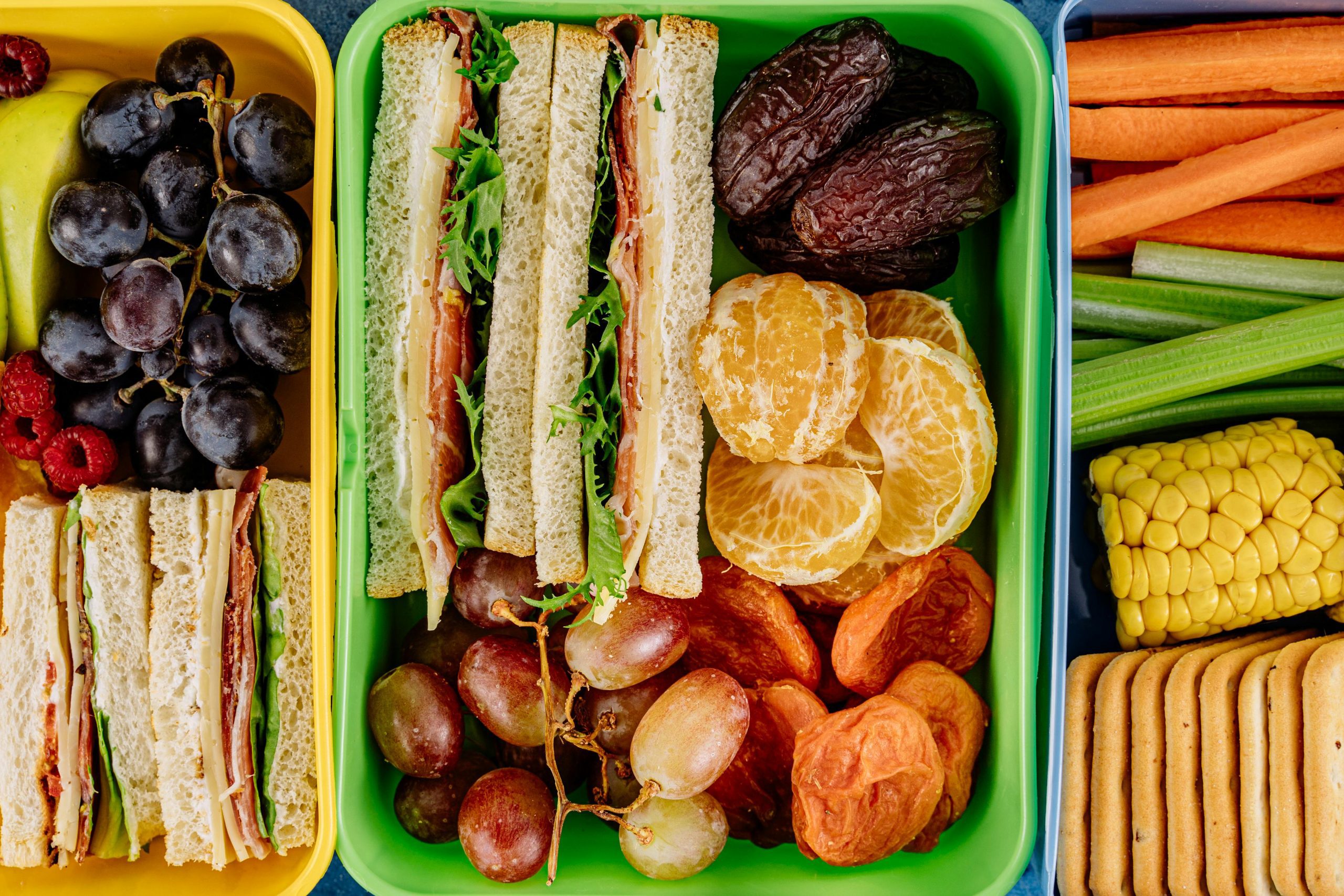
More Filipino schoolchildren are arriving with “double-packed” lunchboxes that pair a home-cooked rice meal with processed snacks, reflecting a shift in urban eating habits and school-day norms.
According to the Department of Science and Technology–Food and Nutrition Research Institute (DOST-FNRI), adolescent overweight/obesity rose from 11.6% (2018) to 13.0% (2021), amid food environments saturated with high-sugar, high-fat options.
Moreover, while the Department of Education (DepEd) restricts junk food in public-school canteens, marketing and availability beyond campus remain pervasive.
UNICEF and the World Health Organization (WHO) likewise warn that aggressive, always-on advertising of ultra-processed foods (UPFs) is reshaping children’s preferences.
Nutrition experts say the “double-pack” reflects time poverty, peer dynamics, and persuasive branding converging in the classroom.
READ: Philippines Confronts Twin Nutrition Threats as Risks Rise
Everyday Ritual, New Normal
On a weekday morning in Quezon City, one parent tucks hot kanin and ulam into a reusable container, then, almost by reflex, adds chips, a chocolate bar, or a sweetened drink “para ’di mapahiya” when classmates open their lunch.
Teachers and canteen staff describe a growing pattern across schools: a homemade base plus a branded extra, meant to keep kids fed and socially “covered.”
The practice, however, nudges classes toward an everyday-treat norm just as health authorities flag diet quality concerns.
According to UNICEF’s 2025 Child Nutrition Report, a historic global crossover occurred in 2025: obesity (9.4%) among 5–19-year-olds surpassed underweight (9.2%), signaling food environments that “fail” children.
This is not merely a parenting quirk. It’s a window into how peer pressure, convenience culture, and persuasive food marketing interact with household aspirations and anxieties, reshaping children’s diets long after the school bell. And it’s happening against a backdrop of stubborn malnutrition and rising child overweight and obesity in the Philippines and worldwide.
READ: LGUs Drive Stunting Cuts as Human Capital Losses Mount
What the Evidence Shows
While there is no national “lunchbox census,” multiple lines of research explain the pattern.
In the Philippines, a UNICEF-commissioned study of digital food marketing found that 99% of 1,035 posts by 20 food and restaurant brands were “not permitted” for children under WHO criteria, using influencers, games, and promotions to drive appeal.
Meanwhile, a 2024 content analysis of television advertising confirmed that unhealthy food promotions dominate child-viewed channels in the country, frequently using premium offers, celebrity cues, and “fun” framing.
But Aren’t Junk Foods Banned in Schools?
On paper, yes. Since 2017, DepEd Order No. 13, s. 2017 has guided “Healthy Food and Beverage Choices” via a Green-Yellow-Red system, restricting “red” items (high in fat, sugar, and/or sodium) from sale and marketing in schools and during school activities.
However, the policy primarily governs what schools sell and promote, not what families pack, creating a gray zone for branded treats in lunchboxes.
Moreover, local measures such as Quezon City’s SP-2579 (2017) ban the sale and promotion of junk food and sugary drinks inside and within 100 meters of schools, yet enforcement varies across thousands of campuses and nearby vendors.
On the other hand, children remain exposed to pervasive TV and social-media promotions that normalize UPFs as daily add-ons, blunting in-school restrictions.
Bottom line: canteen shelves may look healthier, but the lunchbox, packed at home and shaped by outside marketing, has become the new frontier.
The Nutrition Signal: 1 in 10 School-Age Children are Overweight or Obese
According to DOST-FNRI’s Expanded National Nutrition Survey (ENNS) 2018–2019 Facts & Figures, overweight/obesity among Filipino children 5–10 years is around 1 in 10 nationally (WHO BMI-for-age). Based on DOST-FNRI’s 2021 ENNS update, adolescent overweight/obesity rose to 13.0% from 11.6% in 2018.
Globally, UNICEF’s Feeding Profit (2025) reports the obesity-over-underweight crossover among 5–19-year-olds, attributing it to increasingly obesogenic food environments and relentless marketing, figures modeled from 2010–2022 trends projected to 2025.
Furthermore, WHO urges mandatory, comprehensive marketing restrictions anchored in government-led nutrient-profile models, alongside stronger labeling, healthier public procurement, and trans-fat elimination.
Why Parents “Double-Pack”: 3 Forces Shaping the Lunchbox
- Peer pressure: “Ayoko mapahiya ang anak ko.”
Children compare what classmates bring; visible branding shapes what feels “normal.” A 2025 primary-school study reports peer influence as a relevant determinant of lunch choices, echoing school-based findings abroad on norms and visual cues.
- Convenience culture: the time-saver economy
With tight mornings, traffic, and two working caregivers, grab-and-go packs guarantee acceptance with minimal prep. International literature shows UPFs thrive on affordability, availability, and consistency, advantages that make them a rational fallback in busy urban households.
- Advertising and algorithms: the always-on persuaders
Brands “youthify” unhealthy products via influencers, memes, contests, and gamified posts; according to UNICEF’s Philippines study, nearly all observed digital promotions aimed at children were nutritionally “not permitted.” Meanwhile, TV content analyses show high exposure persists, especially at peak viewing times for kids.
A Policy Architecture That Stops at the Lunchbox Zipper
DepEd’s Green-Yellow-Red framework remains a cornerstone of school policy, and some divisions have reiterated compliance.
Nevertheless, much of the food environment, home pantries, sari-sari stores, delivery apps, and the social feed, sits beyond canteens. That is why, in 2023, WHO issued a guideline urging countries to adopt comprehensive, mandatory restrictions across settings and media, anchored in nutrient-profile models.
Moreover, the Philippines has moved to review and finalize its own nutrient-profile model for regulating food marketing and front-of-pack labeling, indicating a policy shift beyond campuses; nationwide cross-media restrictions, however, remain under development.
Meanwhile, DepEd’s School-Based Feeding Program (SBFP) continues to serve undernourished learners with hot meals and milk, crucial for the undernutrition side of the “double burden”, but it does not, by itself, address the daily drift toward UPFs in typical lunchboxes.
The Culture Shift in the Classroom: Treats as “Tickets” to Belonging
Teachers in urban schools describe a familiar choreography: the home-cooked meal appears first; branded items emerge at recess for sharing or swapping. While such observations are largely anecdotal, they align with evidence that constant exposure to UPF marketing nudges norms so that treats feel every day.
According to UNICEF’s 2025 report, children are exposed to “a constant supply of cheap, ultra-processed foods and sugary drinks,” while TV and digital marketing in the Philippines continue to reinforce brand appeal through child-targeted strategies.
Where School Policy Meets the Street: Cracks and Opportunities
- Define and align. Quezon City bans selling and promoting junk food and sugary drinks inside and within 100 meters of schools; aligning such ordinances with DepEd’s Green-Yellow-Red criteria can clarify definitions and make enforcement fairer for small vendors.
- Market with kids in mind. Filipino researchers mapped children’s TV ad exposure; UNICEF charted the social-media playbook. Aligning national policy with WHO’s 2023 guideline, including nutrient-profile-based restrictions across media, would reduce the “ask pressure” on parents.
- Nudge the lunchbox. Schools can extend the Green list beyond canteens via “Green Bites Day,” sticker systems, and simple pack-lists that celebrate fruit, tubers, and proteins children actually like, leveraging peer-to-peer modeling rather than lectures. (Behavioral approaches are widely supported in school-based interventions.)
- Close the convenience gap. PTAs and barangays can co-create low-cost, ready-to-pack “Green” ideas—boiled saba, singkamas sticks, peanuts, pandesal with egg or cheese—and circulate them in class chats where recipes travel fast.
- Keep feeding the vulnerable. While watching the other curve. SBFP’s tracking should continue for undernourished learners, while parallel efforts de-normalize “treat-as-daily-default” for the broader student body.
Parents’ Calculus: Cost, Time, and Avoiding Conflict
Parents juggle budget, time, and child acceptance. The home-cooked meal checks cost; the branded pack checks speed and compliance, no morning quarrel, no refused baon. International evidence indicates advertising exposure shapes children’s requests and intake, which in turn pressures household choices; reducing exposure is linked to healthier defaults.
For example, Would Reducing Children’s Exposure to Food Advertising Prevent Childhood Obesity? (2025) reviews how advertising influences children’s purchase requests, preferences, and intake, reinforcing industry-created demand.
What a Healthier “Double-Pack” Could Look Like
The lunchbox has capacity for two ideas at once: culture-anchored meals and kid-friendly, minimally processed extras. In practice:
- Keep kanin + ulam center stage: adobo flakes with cucumber, tortang talong, gising-gising or ginisang sayote, tinola in a leak-proof jar, monggo with malunggay.
- Swap treats for “Green” options: boiled peanuts, roasted corn, air-fried kamote, banana slices, fruit cups, lightly sweetened yogurt, and water.
- Use Yellow sparingly: small portions, occasional framed as treats, not daily staples. DepEd’s color ladder is a ready teaching tool
Why This Matters Now
The Philippines continues to battle undernutrition while child overweight creeps up, about 1 in 10 among 5–10-year-olds nationally, higher in some urban areas, based on ENNS data.
Meanwhile, globally, obesity has overtaken underweight among school-age children, underscoring that this is not a side plot but a front-page culture story with long-term health costs.
The lunchbox is love—and it is a policy battleground. With consistent school rules, smarter local ordinances, and modern marketing safeguards, the baon kids compare can be both proudly Filipino and quietly healthy, and no second pack required.