
With insights from Dr. Jon Atacador, Breast Surgeon
Early detection saves lives — and one of the simplest ways to spot changes in your breasts is through regular self-examination.
While a self-breast exam (SBE) is not a substitute for medical screening, it helps women become familiar with their own breast tissue and notice anything unusual sooner.
In this guide, Dr. Jon Atacador explains when and how to do a proper self-breast exam and what to look out for.
Why Self-Examination Matters
The goal of a self-breast exam isn’t to replace mammography — it’s to build awareness.
When you know what your normal feels like, you’ll be able to detect new lumps, swelling, or skin changes early and consult a doctor promptly.
“It’s about awareness, not anxiety,” says Dr. Atacador. “You can’t prevent every case, but you can prevent late detection.”
When to Do It
Timing matters because your breast tissue changes throughout your menstrual cycle.
- If you menstruate: Examine your breasts 3–5 days after your period ends, when hormonal swelling has gone down.
- If you are menopausal: Pick a consistent date each month (for example, the 1st or 15th).
- If you are pregnant or breastfeeding: Ask your doctor about the best schedule and technique.
Set a monthly reminder on your phone or calendar — consistency is key.
Step 1: Visual Inspection
Stand in front of a mirror with your shoulders straight and arms at your sides.
- Look for symmetry: One breast may be slightly larger than the other — that’s normal.
- Check the skin: Watch for dimpling, redness, thickening, or rash-like texture.
- Inspect the nipples: See if one is newly inverted or there’s crusting or discharge.
Next, repeat the check with:
- Hands pressed firmly on hips
- Arms raised overhead
- Slightly leaning forward
These positions highlight subtle contour changes that might otherwise be missed.
Step 2: Palpation (Feeling for Changes)
Lying Down
- Place a pillow under your right shoulder and your right arm behind your head.
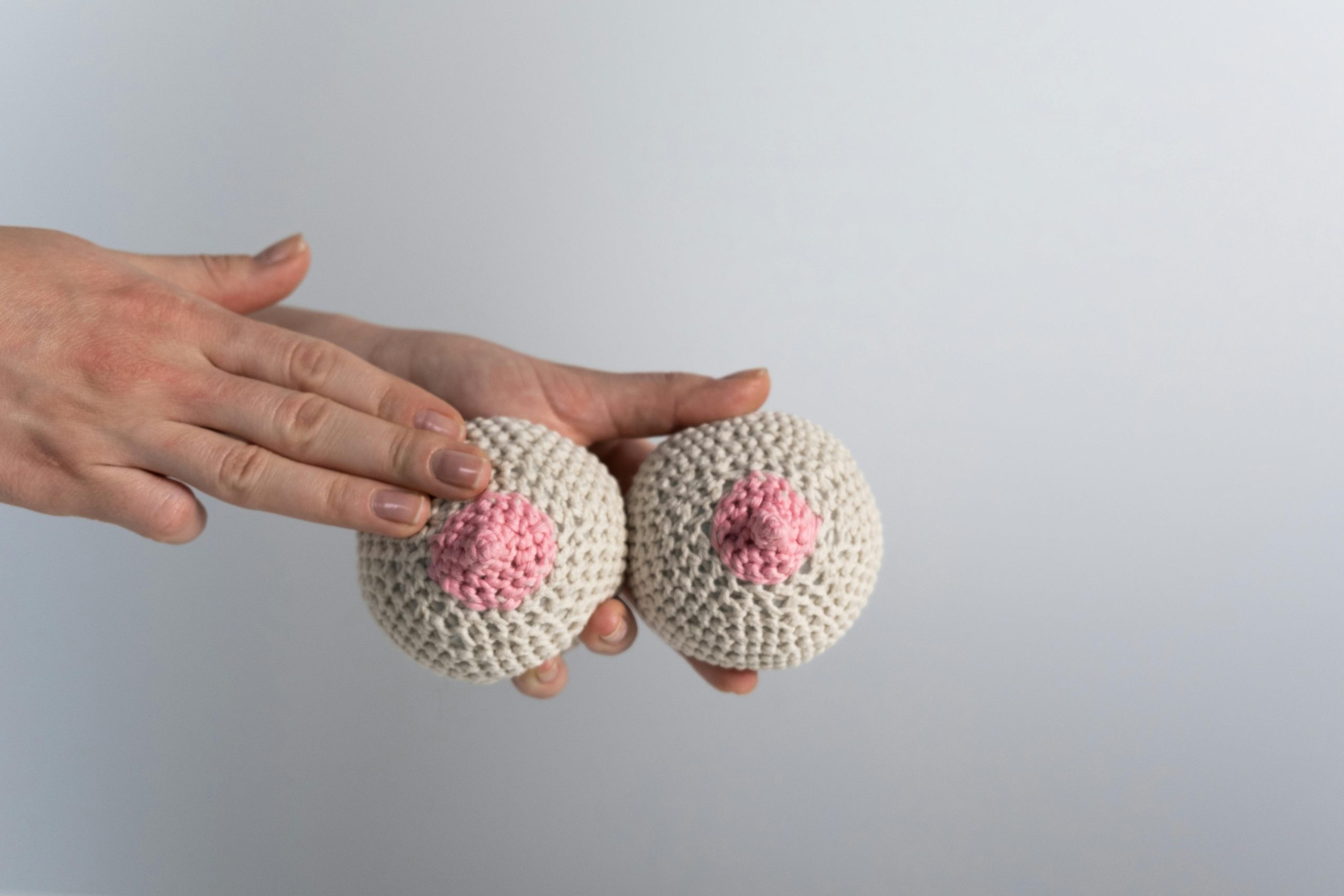
- Use the pads of your three middle fingers on your left hand to examine the right breast in small circular motions.
- Move in one of these patterns — whichever feels easiest:
- Wedge method: from nipple outward in sections like a pie.
- Spiral method: in circles from the outside toward the nipple.
- Up-and-down method: vertically across the breast.
- Use light, medium, and firm pressure to feel different tissue depths.
- Repeat on the left breast using your right hand.
Standing or Shower Check
Soapy skin can make movement smoother. Use the same pattern and pressure.
Don’t forget to feel:
- The underarm area, where lymph nodes are located.
- The collarbone region, for swelling or unusual firmness.
What to Watch For
If you notice any of these, schedule a medical evaluation right away:
- A lump, thickening, or area that feels different from surrounding tissue
- Skin dimpling or puckering
- Nipple inversion or discharge (especially bloody or clear)
- Swelling, warmth, or redness in part of the breast
- Persistent pain in one spot
“Finding something doesn’t always mean cancer,” Dr. Atacador emphasizes.
“But it does mean you should get it checked as soon as possible.”
Tips for Effective Self-Checks
- Do it monthly. Habits make awareness automatic.
- Use the same technique each time. That way, you’ll recognize new changes.
- Don’t rush. The entire exam takes only about 5–10 minutes.
- Combine with screening. Annual mammograms from age 40 (or earlier if high-risk) remain essential.
- Stay calm. Most lumps turn out to be benign, but only your doctor can confirm.
Access to routine imaging can vary, but self-exams cost nothing and empower women everywhere — from urban centers to rural communities — to take charge of their health.
Dr. Atacador encourages open discussions:
“Breast health shouldn’t be taboo. Teach your daughters, sisters, and mothers how to check — it’s an act of love.”
Self-examination is a skill every woman can learn. Practice monthly, stay observant, and partner with your healthcare team for regular professional screenings.
Awareness today can mean early detection tomorrow.
Do you feel like you need to get your breasts checked? Contact Dr. Jon Atacador through his Facebook page and schedule your consultation or check up today.
References
- American Cancer Society. Breast Cancer Early Detection and Diagnosis.
- Mayo Clinic. Breast Self-Exam: How to Check Your Breasts for Lumps.
- World Cancer Research Fund. Breast Cancer Prevention and Early Detection Guidelines.
- Healthline. How to Do a Breast Self-Exam the Right Way.
- WebMD. Breast Cancer Detection and Symptoms.
- Johns Hopkins Medicine. Breast Self-Exam and Why Awareness Matters.