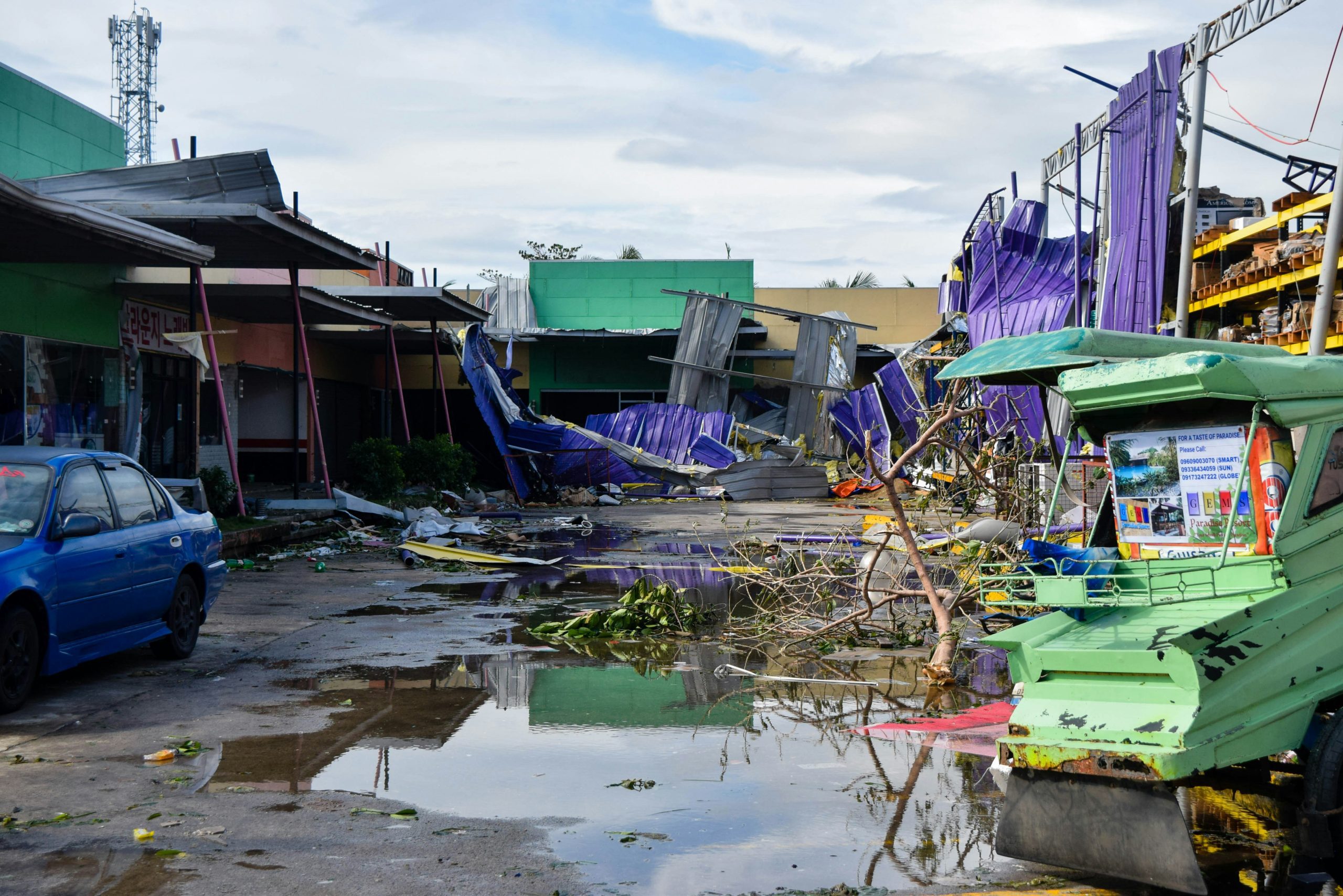
A string of typhoons — Nando (Ragasa), Opong (Bualoi), and most recently Paolo (Matmo) — battered the Philippines in recent weeks, unleashing floods, landslides, and mass evacuations across Luzon and the Visayas, according to the Philippine Atmospheric, Geophysical and Astronomical Services Administration (PAGASA).
Each storm disrupted food supply chains, isolated farming towns, and strained evacuation centers already beyond capacity.
Relief agencies report that many evacuees relied on government food packs, mainly rice, instant noodles, and canned sardines, rations that stave off hunger but fall short of children’s nutritional needs.
Nutrition experts warn that repeated storms compound the country’s existing burden of undernutrition and stunting.
Meanwhile, the National Nutrition Council (NNC) used its October 1–2 Nutrition in Emergencies training in Davao City to stress that child nutrition must be treated as a life-saving priority in every evacuation plan.
READ: LGUs Drive Stunting Cuts as Human Capital Losses Mount
How Storms Snap the Food Chain
PAGASA reported that Tropical Cyclone Aghon (Ewiniar) in 2024 inundated Southern Luzon and parts of the Visayas, affecting more than 152,000 individuals and damaging roads, bridges, and farms.
Moreover, the Department of Social Welfare and Development (DSWD) recorded over 78,000 families, nearly 290,000 people, affected by Aghon and monsoon rains, with flooding delaying deliveries of fresh produce, fish, and poultry to local markets.
When crops drown and farm-to-market roads become impassable, the shock ripples from seed suppliers and fisherfolk to sari-sari stores, and into evacuation centers.
By early 2025, the situation worsened as climate shocks and tight supplies pushed up the cost of rice, the national staple.
On February 3, 2025, the Department of Agriculture (DA) declared a food security emergency on rice, authorizing the release of National Food Authority buffer stocks to stabilize supply and protect low-income households; the DA cited price volatility and climate-related disruptions in key rice provinces as drivers.
Taken together, these climate and logistics shocks undermine progress on food and nutrition security.
2023 Expanded National Nutrition Survey (ENNS) of the DOST–Food and Nutrition Research Institute (FNRI) shows that 23.6% of Filipino under-fives are stunted and 5.6% are wasted, signaling persistent chronic and acute undernutrition.
Globally, the 2025 Joint Child Malnutrition Estimates (JME) by UNICEF, WHO, and the World Bank found that progress against child malnutrition has stalled, placing millions at higher risk when disasters strike.
In short, when typhoons sever food routes, families shift to calorie-dense but nutrient-poor diets, deepening undernutrition among children already on the edge.
READ: Philippines Confronts Twin Nutrition Threats as Risks Rise
What’s Actually in the Relief Box?
The DSWD Family Food Pack (FFP) remains the backbone of emergency feeding. According to DSWD’s Guidelines on the Provision of Family Food Packs (MC 2021-011), one pack is designed to support a family of five for two to three days.
Meanwhile, the DSWD Disaster Response Management Bureau lists typical contents: six kilograms of rice, assorted canned goods (sardines, tuna flakes, corned beef), and powdered drinks (coffee or cereal drinks), items chosen for shelf life and portability.
Field updates corroborate this composition; for example, DSWD Field Office I in 2024 distributed packs with six kilos of rice, canned fish/meat, and coffee/cereal sachets, while PNA reported similar contents in Eastern Visayas distributions.
However, nutrition specialists note that while FFPs provide essential calories, they emphasize energy density and salt preservation rather than micronutrient balance.
According to FNRI analyses and sector reviews, most emergency foods in Philippine responses skew high in carbohydrates and sodium but low in vitamins A and C and iron — nutrients crucial for immunity and recovery.
Furthermore, a 2024 study by Golloso-Gubat et al. in Frontiers in Sustainable Food Systems found the Philippine food system nutrient-deficient and vulnerable to climate shocks, with low resilience and nutrient adequacy compared to peers in Asia.
Globally, Sphere and the Food Security Cluster (FSC) set a benchmark of 2,100 kcal/person/day for full assistance and acknowledge that early-phase rations often partially cover energy needs for feasibility; nevertheless, prolonged dependence on calorie-heavy, low-diversity foods heightens malnutrition risks.
Therefore, the typical relief box is both the response’s strength, rapid reach, and its weakness when evacuations drag on.
READ: PHCON 2025 Weaves Reforms, Confronts Health Spending Gaps
Why the “Typhoon Diet” is a Child Health Risk?
For children 6–23 months, diets in emergencies must deliver nutrient density as well as calories.
According to the WHO 2023 Guideline for Complementary Feeding, complementary foods should be rich in iron, zinc, calcium, and vitamins A and C, with continued breastfeeding up to two years and beyond; on the other hand, starchy staples, instant noodles, and ultra-processed items—often high in sodium and low in micronutrients—cannot meet these needs.
The familiar rotation of rice, instant noodles, and canned sardines/corned beef provides quick energy yet fails to supply a balanced child diet.
While canned sardines contribute protein, calcium, and omega-3s, their high sodium and lack of vitamin C and iron make them insufficient as a stand-alone staple during extended displacement.
Based on the ENNS 2023, undernutrition remains entrenched: 23.6% stunted and 5.6% wasted among under-fives.
Meanwhile, the JME 2025 warns that global progress against stunting and wasting is stalling, with 148 million stunted and 45 million wasted children worldwide.
Public-health evidence shows that undernourished children are up to nine times more likely to die from infections such as pneumonia and diarrhea than well-nourished peers, according to WHO and UNICEF.
Consequently, in crowded shelters where sanitation is strained, poor diet quality and infection risk form a dangerous loop, making diversified, micronutrient-rich foods, not just calories, critical.
Diaries From the Floor (Composite)
These meal sketches are illustrative composites, not verbatim accounts, grounded in verified DSWD FFP contents and documented field reports.
On day one, families typically rely on FFPs (six kilos of rice, canned fish or meat, coffee/cereal sachets), according to DSWD; PNA reports mirror this mix in Eastern Visayas distributions.
By day three, supplies thin out; meanwhile, DSWD mobile kitchens—as described by the Philippine Information Agency—begin serving hot, home-cooked meals with donated vegetables and monggo to ensure at least one nutrient-rich dish for children.
By day six, rice and canned goods are replenished, but fresh produce is still scarce; NNC and WHO protocols call for MUAC screening to flag wasting early, while health workers monitor cough, diarrhea, and fever common in crowded centers.
According to a MindaNews report on Mindanao displacement, families value canned foods in the first days but seek vegetables and fruit as weeks pass, an everyday reminder that survival foods are not the same as recovery foods.
What Responders are Doing — and Where the Gaps Remain
According to NNC updates, the council has scaled up NiE training, including a blended-learning course launched in the Davao Region, to strengthen emergency nutrition and information management.
The Philippine Information Agency confirms that Davao Occidental trained Local Nutrition Clusters on disaster risk reduction, coordination, and Infant and Young Child Feeding in Emergencies (IYCF-E).
Furthermore, the Philippine Plan of Action for Nutrition (PPAN) 2023–2028 notes that NiE modules have been updated and disseminated nationwide with support from DOH, UNICEF, and the World Food Programme (WFP) to “hard-wire” nutrition into disaster operations.
Meanwhile, WFP has expanded logistics and cash support to complement DSWD relief. According to WFP updates, cash assistance reached families affected by multiple typhoons—for example, over 14,500 households with young children in Bicol in 2024 through funding from the Republic of Korea, so families could buy fresh food when markets reopened.
At the same time, the Department of Agriculture has implemented recovery packages to restore production, seed and planting materials, livestock restocking, and input subsidies, to shorten the gap between flood and harvest and stabilize prices.
Nevertheless, the menu monotony in many shelters persists. Both WFP and NNC acknowledge that translating strong policy into better plates requires tighter inter-agency coordination, localized procurement of nutritious items, and more diversified prepositioned stocks.
Until then, the gap between policy and plate will continue to define what displaced families actually eat.
What Would a Child-Sensitive Emergency Plate Look Like?
Standards exist. Sphere and the Food Security Sector urge rapid movement toward dietary diversity and adequate energy. For young children, WHO and UNICEF recommend continued breastfeeding, animal-source or fortified blended foods, vitamin-C-rich items to enhance iron absorption, and multiple micronutrient powders (MNPs) where appropriate.
According to a DILG–NNC joint circular, local governments are encouraged to use Complementary Food Production Facilities (CFPFs), established with DOST–FNRI, to produce fortified complementary foods for children 6–23 months.
Based on a WFP study, iron rice fortification is part of the Philippines’ nutrition strategy to improve micronutrient intake among vulnerable groups. In practice, integrating iron-fortified rice, monggo, and fortified cereal blends into FFPs would boost nutrient density and help prevent anemia among children and mothers.
Canned sardines, while valuable for protein and calcium, should be paired with vitamin C sources (e.g., calamansi or fortified juices) and leafy greens when markets reopen, ideally supported by cash or voucher assistance, a modality WFP promotes to diversify diets post-disaster.
Furthermore, community kitchens, validated by a Philippine public-health emergency manual—can deliver safe, nutritious hot meals with vegetables and pulses, breaking the rice-and-canned-goods cycle.
To protect infants, responders should establish IYCF-E corners and strictly enforce the Milk Code (EO 51) and DOH AO 2005-0014 to prevent unsafe donations of breast-milk substitutes, measures that UNICEF Philippines says are essential when clean water and sanitation are limited.
The Numbers Behind the Urgency
According to the DOST–FNRI ENNS 2023 update, 23.6% of Filipino under-fives are stunted and 5.6% are wasted.
Moreover, the 4th National Plan of Action for Children (2023–2028) flags GIDA communities as priority areas where nutrition and basic services lag, especially during disasters.
During Aghon (Ewiniar) in May–June 2024, DSWD placed teams on Red Alert and prepositioned food packs in multiple regions (e.g., 12,492 FFPs in Region V), based on official DROMIC reports.
For the latest typhoon season, WFP reports that, with its transport support, the government delivered close to 318,000 FFPs and non-food items to 1.6 million people, while WFP provided cash assistance to 151,350 people in Albay, Aurora, Cagayan, Camarines Sur, and Catanduanes—figures based on WFP’s 2024 Typhoon Season: Philippines Response report (issued June 25, 2025).
Collectively, the data show that while relief volumes move quickly, protecting child nutrition requires going beyond calories when evacuations last weeks.
“We’re Grateful — But My Baby Needs Fruit”
“Salamat sa bigas at sardinas. Pero para sa sanggol ko, sana may prutas o gulay kahit konti, at lugaw na masustansya.”
[Thank you for the rice and sardines. But for my baby, I wish there were at least some fruits or vegetables, and a more nutritious porridge.]
This composite quote captures what mothers often express in shelters; the concern aligns with WHO guidance that children 6–23 months need diverse, nutrient-dense complementary foods while breastfeeding continues.
According to NNC updates from Mindanao and Luzon, MUAC screening is now routine in many evacuations to spot at-risk children early.
Meanwhile, PIA notes DSWD mobile/RTE meals include vegetables and nutribun to balance preserved rations. Where markets resume, WFP and DSWD have used cash assistance, for example, supporting 14,500+ Bicol households, so families can buy fresh food. Local governments, as documented by PNA, have also procured vegetables from nearby farmers to add fresh produce to distributions.
On the other hand, WHO and UNICEF warn that undernutrition and infection form a vicious cycle in crowded centers, another reason diet quality matters as much as supply lines.
Ultimately, for families living on the floor of a classroom, the difference between “full” and “well-nourished” can be a bowl of monggo or a handful of guavas.
The Takeaway from Davao’s NiE Week
The NNC’s NiE training in Davao arrives at the right time. According to WFP, the country moved hundreds of thousands of food packs and significant cash aid last season, logistically robust, yet nutrition-light if prolonged.
Based on the ENNS and JME findings, the stakes are clear: unless the emergency menu shifts to less sodium, more micronutrients, and unless IYCF-E protections hold, children will pay for every broken bridge with lost growth.
Therefore, if Mindanao’s NiE cohort treats nutrition as front-line emergency care, fewer children will leave shelters lighter and sicker than when they arrived.
In every storm’s aftermath, survival should not come at the expense of growth.