

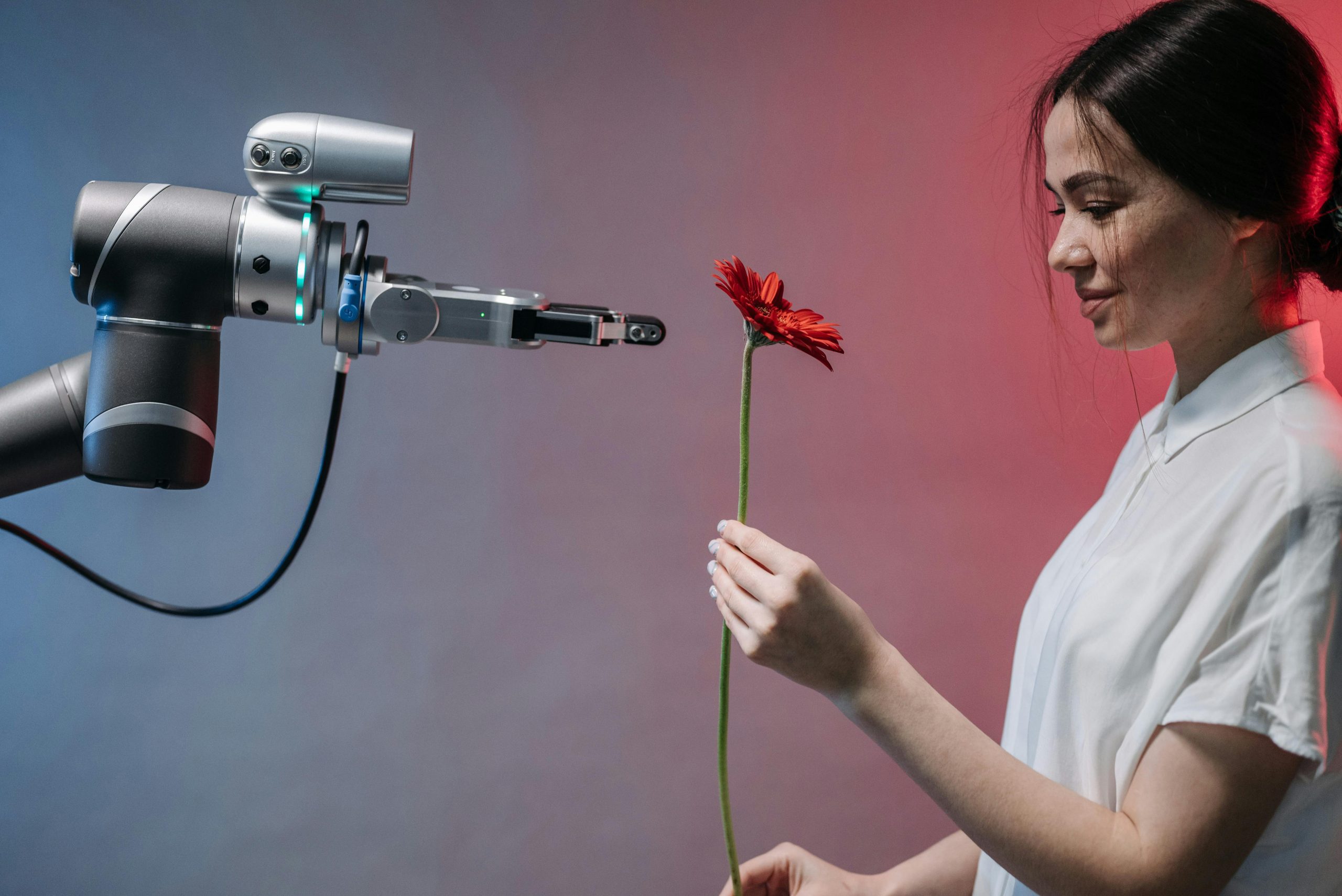
The Department of Science and Technology (DOST) has committed over ₱2.6 billion to artificial intelligence (AI) projects through 2028, part of a sweeping national strategy to mainstream AI across healthcare, education, mobility, environmental monitoring, disaster risk reduction, and other emerging platforms.
Since 2017, the agency has already invested ₱2.3 billion in 113 AI-related research and development initiatives.
According to DOST, its roadmap emphasizes four strategic pillars: infrastructure, talent and skills development, research and data, and policy engagement.
By August 2025, the Philippines had risen from 65th place in 2023 to 56th in 2024 in the AI Readiness Index, reflecting advances in policy, infrastructure, and governance capacity.
To sustain momentum, DOST is also establishing a national AI think tank and a virtual hub to support startups, boost collaborations, and grow Filipino expertise.
READ: Philippines Enforces IHR Amendments, Accelerates Pandemic Preparedness
A Program Built for the ‘Next Mile’ of Care
The Philippine Council for Health Research and Development (DOST–PCHRD) is anchoring this national effort in health through its Digital and Frontier Technologies for Health (DFTH) program.
At its Talakayang HeaRT Beat press briefing on May 27, 2025, the agency showcased early-stage projects that bring AI and extended reality (XR) into clinics and communities.
These include i-SULAT, a handwriting analysis tool developed by the University of Santo Tomas for early childhood and neurological screening, and ImGTS (Immersive Gamification Technology Systems), which deploys virtual reality (VR) environments for therapy among children with cerebral palsy (CP) and patients with Alzheimer’s disease.
“Through science, technology, and innovation, we are laying the groundwork for a healthier Philippines,” DOST Secretary Renato U. Solidum Jr. said at the event.
Meanwhile, Undersecretary for R&D Leah J. Buendia stressed that digital health must accelerate access for underserved communities, not just the digitally connected.
Global studies back this direction.
A 2024 meta-analysis by Komariah et al. reported that VR interventions significantly improve balance, gross motor function, and activities of daily living among children with CP, while a 2025 Joanna Briggs Institute evidence summary found VR rehabilitation improves strength, motor function, and engagement in children and adolescents with cerebral palsy.
READ: Watchdogs Warn Filipinos on Toxic Christmas Lights, Toys
From Handwriting to Health Signals: Smart Screening with i-SULAT
DOST–PCHRD’s HeaRTNovation program brief shows that i-SULAT integrates a multisensor pen with intelligent software to capture handwriting parameters such as speed, angle, and pressure in real time, offering standardized and objective assessment for children.
The project is currently at Technology Readiness Level 5, with calibration tests complete and broader validation studies under way.
Although i-SULAT has not yet demonstrated peer-reviewed diagnostic validity in stroke or dementia contexts, global research suggests the approach has promise.
A 2025 study, Dynamic Handwriting Features for Cognitive Assessment in Inflammatory Demyelinating Diseases, found handwriting dynamics can help distinguish patients with neurological disorders from healthy controls.
Similarly, a 2023 study, Auxiliary Screening for Alzheimer’s Disease Based on Handwriting Characteristics, showed handwriting kinematics differ significantly between Alzheimer’s and non-Alzheimer’s groups.
These findings provide scientific grounding for i-SULAT’s next phase of clinical validation.
‘Gaming’ for Good: ImGTS and the Rise of Immersive Rehabilitation
DFTH also supports ImGTS, a two-pronged project by UP Manila and UP Diliman that harnesses immersive VR games for rehabilitation. One arm targets children with CP, encouraging therapeutic movements such as lifting and balancing in game-like settings; the other tests whether VR environments can help older adults with dementia reduce agitation, improve mood, and boost daily engagement.
According to DOST–PCHRD, ImGTS is now in Phase 2 pilot-scale testing, with evaluations of safety, usability, satisfaction, and therapeutic potential ongoing. Early trials reported minimal VR-induced discomfort, and children described the sessions as “enjoyable” with only modest fatigue.
In addition, Philippine media outlets, including ABS-CBN and GMA News, profiled games like Mission to Planet Axel (for CP) and Suroy-suroy (for dementia), developed under UP Manila’s AXEL Virtual Care initiative, which blend clinical goals with culturally relevant themes.
Global research strengthens its case. A 2023 systematic review by Lin et al. in Frontiers in Aging Neuroscience found VR interventions reduce agitation and improve mood among dementia patients.
Meanwhile, Komariah et al. (2024) confirmed that game-based VR significantly improves balance and motor functions in children with CP.
AXEL: a Philippine Home for VR in Health
Behind ImGTS is the Augmented Experience E-health Laboratory (AXEL), established under DOST–PCHRD’s Immersive Technology Applications in Healthcare program, in partnership with UP Manila and UP Diliman. According to PCHRD, AXEL serves as a development and testing hub for VR-driven innovations, guiding projects from prototype design through pilot trials.
In early 2025, GMA News reported that AXEL launched public trials of Mission to Planet Axel and Suroy-suroy, describing them as “fun, exciting, and meaningful” for early testers.
By embedding Filipino cultural contexts in its VR games, AXEL illustrates how locally grounded design can enhance both user engagement and clinical outcomes.
Globally, similar labs have shown impact. Komariah et al. (2024) found VR rehab improved daily living activities among children with CP, while Lin et al. (2023) confirmed VR therapy improved mood and social interaction for dementia patients.
Why Immersive?
The global evidence base for immersive health tools is strengthening. According to Mugisha et al. (2024), a review of 22 randomized controlled trials showed immersive VR outperforms non-immersive VR in improving upper limb function and daily living activities after stroke.
Likewise, Sung et al. (2024), in a meta-analysis of 45 RCTs, found VR-based healthcare education significantly boosted knowledge, confidence, and skill acquisition among trainees.
Meanwhile, a 2025 study by Aydin et al. on neonatal resuscitation training found that VR simulation improved trainees’ sense of presence and confidence compared with 360-degree video, particularly for mask placement and newborn response skills.
Nevertheless, reviews published in 2024–2025 caution that challenges remain around cost, access, and scalability, critical considerations for low- and middle-income countries like the Philippines.
Beyond Rehab: AI for Public Health Intelligence
DFTH is not limited to rehabilitation.
According to DOST–PCHRD (May 27, 2025), the HealthPH project by National University Manila uses machine learning and natural language processing to analyze multilingual social-media posts, English, Filipino, and Cebuano, to detect and visualize respiratory disease trends for LGUs across Luzon, Visayas, and Mindanao.
This approach complements traditional surveillance by providing low-cost, near-real-time outbreak signals.
Globally, a 2024 scoping review in Frontiers in Public Health (Hossain et al.) found AI-driven social-media analysis can detect early outbreak signals for respiratory diseases, though accuracy varies by language and data quality.
Likewise, a 2024 Lancet Digital Health study (Zhang et al.) demonstrated that multilingual machine-learning models could predict influenza activity up to two weeks earlier than conventional surveillance.
The Money and the Momentum
Sustained funding is critical for transforming pilots into public goods. According to the Philippine News Agency (June 2025), DOST has committed ₱2.6 billion to AI projects through 2028.
By August 2025, Philstar Tech reported that the agency had already invested ₱2.3 billion across 113 AI projects since 2017, proof that the latest pledge builds on an existing pipeline.
For health innovators, this multi-year funding provides time and resources to scale prototypes into clinical deployment, pursue regulatory clearances, and integrate into hospital information systems, ensuring solutions like ImGTS and HealthPH reach barangay health stations, not just university labs.
Guardrails: Ethics, Equity, and Evaluation
Frontier health technologies raise new risks if safeguards fail. DOST–PCHRD frames DFTH as a program committed to ethics-by-design, inclusivity, and continuous evaluation.
- Ethics & data governance. According to the National Privacy Commission’s 2023 Annual Report, health projects using AI must comply with the Data Privacy Act of 2012, requiring explicit consent, data minimization, and protections against algorithmic bias.
- Access & affordability. The WHO Global Report on Assistive Technology (2022) found that over 90% of people in low-income settings lack access to needed assistive technologies due to high costs, highlighting the need for low-cost VR headsets, offline features, and public financing.
- Workforce & training. A Philippine Institute for Development Studies (PIDS) 2023 paper flagged persistent shortages of therapists and urged integrating digital tools into community health worker roles, an approach echoed by DFTH’s cross-university collaborations.
Ultimately, clinical adoption must show real-world benefits in Philippine populations, such as reducing caregiver burden, shortening therapy waitlists, or improving adherence.
The Human Stakes
The stakes extend beyond laboratories. ABS-CBN reported in May 2025 that UP Manila’s VR games were designed to make therapy more enjoyable for children with CP and dementia patients, encouraging adherence.
Likewise, a 2024 Lancet Digital Health study showed that AI-driven outbreak prediction provided a two-week lead time over traditional reporting, potentially lifesaving in a disaster-prone country like the Philippines.
DFTH is not offering a silver bullet but a toolkit: AI to see earlier, XR to move better, and data to decide faster. For families stretched by costly travel and scarce therapy slots, or for LGUs racing to respond to outbreaks, this toolkit could be the difference between missed opportunities and measurable health gains.
And for that child in Manila lifting an arm toward a virtual planet, it may be as simple, and as profound, as wanting to try again tomorrow.
DISCLAIMER
This article provides general information and does not constitute medical advice. Consult your healthcare provider for personalized recommendations. If symptoms persist, consult your doctor.