
Digital 2025 report by DataReportal (via We Are Social and Meltwater) shows the Philippines had 97.5 million internet users as of early 2025, or 83.8% of the population.
At the same time, there were 90.8 million social media user identities, or around 78% of Filipinos.
Moreover, Filipinos spend an average of 8 hours and 52 minutes online daily, one of the highest in the world, with 3 hours and 32 minutes devoted to social media alone.
However, it is not just the number of hours online that raises concern.
A recent longitudinal study published in JAMA found that teenagers who exhibit addictive patterns of screen use, including compulsive scrolling and constant checking, are two to three times more likely to experience suicidal ideation and emotional distress.
This underscores that the real issue lies not only in duration but also in the quality and compulsivity of online engagement.
ANXIOUS? JOURNALING WILL HELP YOU CALM DOWN.
The Face Behind Numbers
Fifteen-year-old “Bea” (not her real name), a junior high school student from Laguna, captures this tension in her daily routine. She told Joyful Wellness that between classes, she scrolls through her feed, saving makeup reels and testing AI-powered beauty filters.
“Ang ganda ko dito,” she laughs, admiring her edited reflection. Yet when the filter fades, so does her laughter. The smooth skin and sharpened jawline vanish, replaced by her natural face.
“Parang iba ’yung itsura ko agad,” she mutters — half-joking, half-disturbed.
For Bea, every scroll becomes a cycle of admiration and insecurity. She admits she sometimes hesitates before posting photos, reviewing multiple takes to find the one closest to her filtered self.
“Minsan feeling ko kailangan ko nang ayusin ’yung mukha ko bago ko ma-post,” she confesses, the humor in her voice slipping into something heavier.
These quiet struggles echo across classrooms, jeepney rides, and barangay basketball courts, where Filipino teens juggle academics, friendships, and the invisible weight of digital expectations.
The “whiplash” Bea feels, between curated perfection online and reality offline, shows how digital stress quietly builds in the spaces between likes, filters, and the pressure to appear “okay.”
READ: Suicide Prevention and Mental Health Awareness for Filipino Families
The Hidden Costs of “Perfect” Feeds
On visually driven platforms, beauty filters shape perceptions of what is “normal.” A 2025 study in Computers in Human Behavior found that university students who used appearance-enhancing TikTok filters reported significantly higher facial dissatisfaction and body-image concerns.
Meanwhile, in the Philippines, a 2020 study in the Journal of Eating Disorders found that 89.5% of adolescents surveyed in Cavite were at risk of developing eating disorders, with high social media affinity strongly linked to body dissatisfaction and unhealthy eating attitudes.
Furthermore, a 2019 survey in JAMA Facial Plastic Surgery revealed that 55% of facial plastic surgeons said patients referenced filtered selfies when requesting procedures — evidence that filters recalibrate real-world beauty expectations.
In response, TikTok announced in late 2024 it would restrict beauty filters for under-18s, blocking those that artificially slim faces or enlarge eyes, while still allowing playful effects. The platform acknowledged rising mental health concerns among teens.
READ: How to Help Someone Who is Suicidal
Influencer Culture: Aspirational… and Exhausting
Influencers provide inspiration and community, but they also drive a polished, always-positive culture that teens constantly measure themselves against.
According to INSG’s 2025 report on Influencer Marketing in the Philippines, spending on influencer advertising is expected to grow by 11.45% annually through 2029, reaching US$186.9 million.
Meanwhile, Meltwater reported that influencer marketing spends in the Philippines hit US$109 million in 2024, a 15.9% increase year-on-year, representing 5.6% of all digital ad spending.
Nevertheless, the “always-on” aesthetic — constant positivity, curated routines, and brand-perfect content — fuels unhealthy comparison.
A study published in Computers in Human Behavior found that heavy social media use amplifies upward comparison, strongly linked to lower body image and diminished life satisfaction. Similarly, a 2024 study in Explore Psychology showed that exposure to idealized Instagram posts significantly reduced body esteem, even if overall self-esteem remained unchanged.
For Filipino teens, among the world’s heaviest social media users, the cycle is relentless: wake up, scroll, compare, repeat.
“Good Vibes Only” — When Positivity Turns Toxic
Encouragement like “be positive!” can be helpful, but when it turns into pressure, it becomes toxic.
According to a 2025 Washington Post report, toxic positivity arises when negative emotions are dismissed with platitudes like “just stay positive.” Experts warn this suppression can increase stress, impair coping, and leave individuals feeling isolated.
Furthermore, Verywell Mind explains that toxic positivity conveys the harmful message that distress itself is unacceptable, often triggering guilt or shame.
On social media, this effect is amplified. Platforms reward upbeat content with likes and sponsorships, while vulnerability risks trolling or rejection.
As a result, many teens learn to mask their struggles, posting smiles while battling anxiety, body-image concerns, or family pressures.
Cyberviolence, Safety, and the Everyday Internet
Digital stress is not just about filters and influencers.
UNICEF Philippines reports that nearly half of Filipino children aged 13–17 have experienced some form of cyberviolence, with rates nearly equal for boys and girls. Most reported verbal abuse, while one in four received sexually explicit messages. About 2.5% had nude images or sexual content shared online, real or manipulated.
Meanwhile, a UNICEF U-Report poll (2019) showed that 85% of Filipino youth encounter unsafe online content or behavior regularly. Globally, a 2022 systematic review in BMC Psychiatry found that even minimal cyberbullying victimization significantly increases the risk of depression and suicidal thoughts.
In the Philippines, a 2025 study on social media use and mental health found that around 8.9% of young adults experience moderate to severe depressive symptoms, with online behavior contributing to the risks.
Schools and the New Mandate on Mental Health
Policy is starting to catch up.
On December 9, 2024, President Marcos signed into law Republic Act 12080, the Basic Education Mental Health and Well-Being Promotion Act.
According to Philippine Daily Mirror, the law mandates school-based mental health programs, including counseling, stress management, and stigma-reduction activities. It also requires every Schools Division Office to establish a Mental Health and Well-Being Office and create plantilla positions for school counselors and counselor associates.
Moreover, the Implementing Rules and Regulations (IRR), released in March 2025, detail how schools must build Care Centers for confidential support and assign trained counselors.
However, a draft DepEd order noted that as of SY 2022–2023, there were only 1,962 guidance counselors nationwide — far short of what students need — highlighting the urgency of scaling up mental health personnel.
What Digital Stress Looks Like — And Why Teens Feel It
For Filipino teens, digital stress takes many forms:
- Appearance Pressure. A 2023 study in Media and Communication found that teens who used beautifying AR filters reported lower self-esteem and increased acceptance of cosmetic procedures.
- Algorithmic Comparison. A 2022 study in Personality and Individual Differences showed that Instagram addiction combined with perfection worries leads to lower body esteem.
- Toxic Positivity. Online cheerfulness often suppresses authentic expression of distress, isolating those who struggle.
- Cyberviolence. UNICEF data confirm nearly half of Filipino teens face online abuse.
- Sleep and Study Disruption. A 2025 PLOS Global Public Health study found that excessive screen time reduces sleep and raises depression risks, especially for girls. Meanwhile, the American Academy of Sleep Medicine reported in 2024 that 93% of Gen Z teens lose sleep by staying up late on social media.
What Helps: A Practical Digital-Detox Guide for Filipino Teens
A digital detox doesn’t mean quitting the internet, it means reasserting control, reshaping how, when, and why screens serve you, rather than the other way around.
This practical, evidence-based guide is designed for schools, youth groups, parents, and teens themselves.
- Reset the Visual Pressure. TikTok’s 2024 filter restrictions for under-18s recognize the risks of beautifying filters. A 2025 Computers in Human Behavior study confirmed that these filters heighten body dissatisfaction.
- Rebuild Your Feed. Follow body-neutral or mental-health accounts. A 2023 BMC Psychology study found curated idealized feeds drive negative social comparisons.
- Time-Box the Scroll. A 2023 RCT in Psychology of Popular Media showed that limiting social media to one hour daily for three weeks improved appearance and weight esteem in youth.
- Swap Doom-Scrolling for Maker Time. Replace late-night scrolling with journaling, drawing, or sports to build confidence beyond likes.
- Protect Sleep. AASM (2024) reported most Gen Z teens lose sleep to social media; charging phones outside bedrooms and using grayscale mode can help.
- Strengthen Support. Respond with empathy, not platitudes—“Salamat sa pag-share; nandito ako.” Schools under RA 12080 must also provide focal points for mental health.
- Report Harm. UNICEF urges teens to use in-app reporting and inform adults; cyberviolence is common, not a personal failure.
- For Student Leaders. Host “Filter-Free Fridays,” integrate well-being into homerooms, and partner with SK councils for offline events.
What Parents and Guardians Can Do (Without a Fight)
- Co-create phone rules (not top-down). Decide together on no-phone zones (dining table), lights-out times, and consequences.
- Model your own boundaries. If adults scroll at dinner, rules won’t stick.
- Ask feelings, not only grades. Try: “Anong nag-stress sa’yo online this week?”
- Validate before advising. Replace “Huwag ka na mag-isip ng ganyan” with “Gets ko na mabigat ‘yan”—then problem-solve together. That counters toxic positivity and builds trust.
Where Policy Meets Practice
Nevertheless, laws only matter if implemented. RA 12080’s IRR calls for trained counselors, functioning referral systems, and teacher capacity-building.
Furthermore, platforms like TikTok must enforce age-appropriate designs consistently. Schools and parents cannot change algorithms, but they can teach teens to decode them: feeds are not mirrors, they are advertising-driven.
The Bottom Line
Filipino teens are growing up in one of the world’s most connected societies. That connectedness brings creativity and community, but also stress from filters, comparisons, and the demand to appear happy.
Studies consistently link heavy exposure to idealized content with body-image concerns and confirm that cyberviolence and sleep disruption are widespread.
What can turn the tide is skill-building: for teens, media literacy and boundaries; for adults, validation over toxic positivity; and for schools, strong mental-health programs under RA 12080.
Ultimately, the goal is not to log off forever but to log on with agency. In a nation of more than 90 million social media identities, digital wellness is no longer just self-care — it is public health.
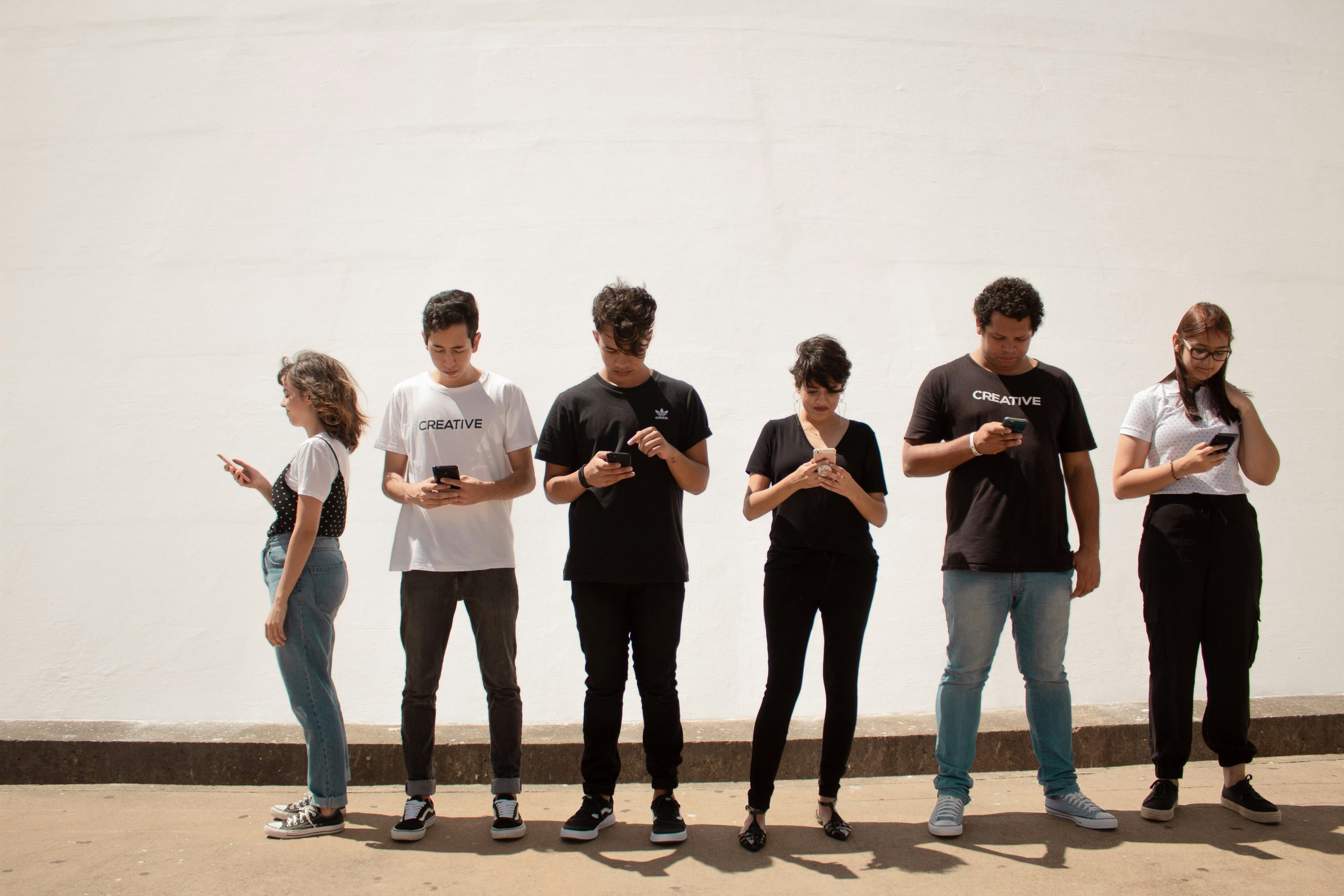
Photo by Creative Christians on Unsplash
DISCLAIMER
This article provides general information and does not constitute medical advice. Consult your healthcare provider for personalized recommendations. If symptoms persist, consult your doctor.