
As the Philippines enters the “ber” months, households and barangays light up streets and homes with parols and Christmas lights, symbols of the country’s long and festive holiday season.
However, advocates continue to warn that many of these decorations — especially uncertified products — may expose families to chemical hazards.
On November 18 to 19, 2024, the EcoWaste Coalition conducted test purchases of holiday lights in Binondo, Manila, and Libertad, Pasay City. Of the 15 products bought, 10 lacked the required Philippine Standard (PS) mark or Import Commodity Clearance (ICC) sticker, a violation of mandatory certification rules.
Using an X-Ray Fluorescence (XRF) analyzer, the group detected lead concentrations between 3,220 and 8,440 parts per million (ppm) in the green cables, far above the European Union’s Restriction of Hazardous Substances (RoHS) limit of 1,000 ppm.
According to the Department of Trade and Industry (DTI), these marks are meant to certify compliance with national safety standards. The absence of PS or ICC stickers leaves consumers at risk of buying unsafe products.
WHAT’S ON YOUR CHRISTMAS LIST? KEEP THEM HERE.
What Watchdogs Keep Finding in Lights
EcoWaste Coalition told Joyful Wellness that its chemical screenings consistently reveal hazardous substances in Christmas lights and ornaments sold in markets.
“For example, the plastic insulation on the electrical wires of seven of the 13 lights analyzed in 2024 contained lead ranging from 2,868 to 7,960 ppm,” the group said. “In 2023, test buys also found lead levels of 3,220 to 8,440 ppm on the plastic-insulated wires of nine of 15 products tested. Under EU rules, lead in electrical products must not exceed 1,000 ppm.”
The group also analyzed Christmas balls in 2024.
Out of 60 samples, 57 contained high levels of bromine, including 43 with more than 15,000 ppm. High bromine levels suggest the use of recycled plastic from e-waste, such as casings of old laptops or TVs, which may contain brominated flame retardants (BFRs). These chemicals are known to leach into the environment through air, dust, food, or skin contact.
Furthermore, the group reported antimony levels of 1,017 to 19,910 ppm in bromine-containing balls, indicating the use of antimony trioxide as a flame retardant. Lead above 100 ppm was also detected in 50 samples, ranging from 113 to 586 ppm.
Other groups have echoed these findings.
In a November 2022 market check, BAN Toxics found that five light sets bought in Pasay, Pasig, and Taguig contained lead levels from 25,500 to 224,000 ppm and cadmium levels from 265 to 506 ppm, well beyond RoHS limits.
On October 25, 2024, the group issued another advisory urging consumers to avoid non-compliant Christmas lights and decorations that may contain lead, though no concentrations were disclosed.
Health Risks from Exposure
The World Health Organization (WHO) classifies lead as one of the top 10 chemicals of major public health concern.
WHO reports that lead exposure contributed to more than 1.5 million deaths globally in 2021, mainly from cardiovascular disease. The agency stresses that there is no safe level of lead exposure, particularly for children and pregnant women.
Lead accumulates in bones and teeth and can be released into the blood during pregnancy, exposing the fetus.
Various studies also confirm the dangers of brominated flame retardants (BFRs). These chemicals can migrate from household products into the environment and are linked to developmental, endocrine, immune, and reproductive problems, as well as increased cancer and diabetes risks.
According to the U.S. National Institute of Environmental Health Sciences (NIEHS), exposure to flame retardants may cause thyroid disruption, immunotoxicity, reproductive toxicity, and neurobehavioral issues in children, who are more vulnerable because their organs are still developing.
Dr. Dex Macalintal, a physician and health vlogger, explained that lead exposure does not always require ingestion.
“Exposure can happen through simple hand-to-mouth contact,” he said. “Children exposed to heavy metals may experience stomach pain, vomiting, headaches, irritability, and in severe cases, seizures.”
He added that repeated low-level exposure can cause long-term problems.
“There are really no ‘safe levels’ of lead. Long-term exposure can damage the kidneys, lower IQ, reduce attention span, and cause learning difficulties. Children absorb lead faster than adults because their blood-brain barrier is not yet fully developed.”
Poverty, he noted, increases risk.
“When families are forced to choose cheaper products, they often end up buying uncertified items that are more likely to contain toxic chemicals.”
Mercury and the Lighting Ecosystem
While lead is the most frequently detected hazard in Christmas lights, health experts also warn about mercury in the broader lighting ecosystem.
According to the EcoWaste Coalition, broken or improperly discarded fluorescent lamps can release mercury vapor, which poses neurotoxic risks. In a June 27, 2025 advisory, the group urged schools and households to shift to certified LED lights, which are mercury-free, energy-efficient, and longer-lasting.
Globally, a 2021 report by the Clean Lighting Coalition, CLASP, and the Mercury Policy Project confirmed that all fluorescent lamps contain mercury and recommended phasing them out in favor of LEDs. These findings reinforce calls for better disposal practices and wider adoption of safer alternatives.
Weak Enforcement and Market Gaps
Despite existing laws, unsafe products continue to flood the Philippine market. EcoWaste attributes this to inadequate customs checks, a widespread network of distributors for uncertified goods, and strong consumer demand for cheaper items.
“The rise of e-commerce has also made it easier to sell uncertified products,” the group noted.
Local governments, meanwhile, are often underfunded and lack training to effectively monitor businesses. Without stronger coordination with national agencies, inspections remain seasonal rather than sustained.
What the Law Requires
In the Philippines, Christmas lights fall under mandatory certification rules. According to the DTI-Bureau of Philippine Standards (BPS), decorative lights rated up to 250 volts — including LED sets, must undergo either PS certification (for locally made) or ICC certification (for imports) under PNS 189:2000.
Based on Memorandum Circular No. 18-13, Series of 2018, PS or ICC marks must be visible and legible on the product or packaging, complete with license numbers and batch codes. In December 2022, the DTI reiterated its reminder for consumers to check these marks when buying lights to avoid risks of overheating, electrocution, or fire.
Some products are exempt, such as rope lights, neon lights, meteor lights, laser lights, battery-powered sets, and those already integrated into Christmas trees or décor.
Safer Options for Consumers
Consumers are advised to buy lights only from legitimate retailers and to ensure they carry a PS or ICC mark. Since there is no certification scheme for other holiday decorations, experts recommend opting for eco-friendly products made of natural or biodegradable materials.
Dr. Macalintal also emphasized proper waste management.
“When we dispose carelessly, toxic substances can leach into soil and water. Over time, they come back to us through the food we eat and the air we breathe. That’s why waste segregation and proper disposal of e-waste is crucial.”
What Parents Need to Remember
Holiday decorating often involves children, which heightens the need for caution.
Research from Cornell University in 2008 found detectable lead in all Christmas light cords tested, advising that children should not handle them and that adults should wash hands after installation.
The U.S. Centers for Disease Control and Prevention (CDC) emphasizes that even low-level lead exposure harms children’s development, while a 2020 UNICEF-Pure Earth report estimated that 800 million children worldwide are affected by lead poisoning.
Experts recommend practical steps:
- Teach children not to mouth bulbs or wiring
- Wash hands after handling decorations
- Ventilate rooms when unpacking
- Choose certified LED lights, which are mercury-free and cooler to the touch
The Takeaway
The holiday season is meant to bring joy, but it also brings hidden risks when households unknowingly buy unsafe products.
The message is clear: Paskong maliwanag, ligtas. Buy certified. Check labels. Limit loads. Replace damaged cords. Use LED. Unplug at night. Dispose responsibly.
As EcoWaste Coalition reminded Filipinos:
“Make the health and safety of your family a top priority this Christmas. Choose certified and eco-friendly products, and avoid uncertified items that may cause electric shock, fire, or toxic exposure.”
Dr. Macalintal added:
“For gifts and decorations, always look for proper labels and certification. Keep metal cords out of children’s reach, encourage handwashing, replace damaged cords, and dispose of broken lights at e-waste collection points. Even low levels of lead exposure can cause harm, so prevention is the best protection.”
As the lights of the season brighten homes and barangays, families are reminded that safety and health should not be sacrificed for spectacle.
A joyful Christmas is not only about dazzling displays but also about making informed choices that protect children and communities.
True holiday cheer shines brightest when it is both maliwanag at ligtas — bright and safe.
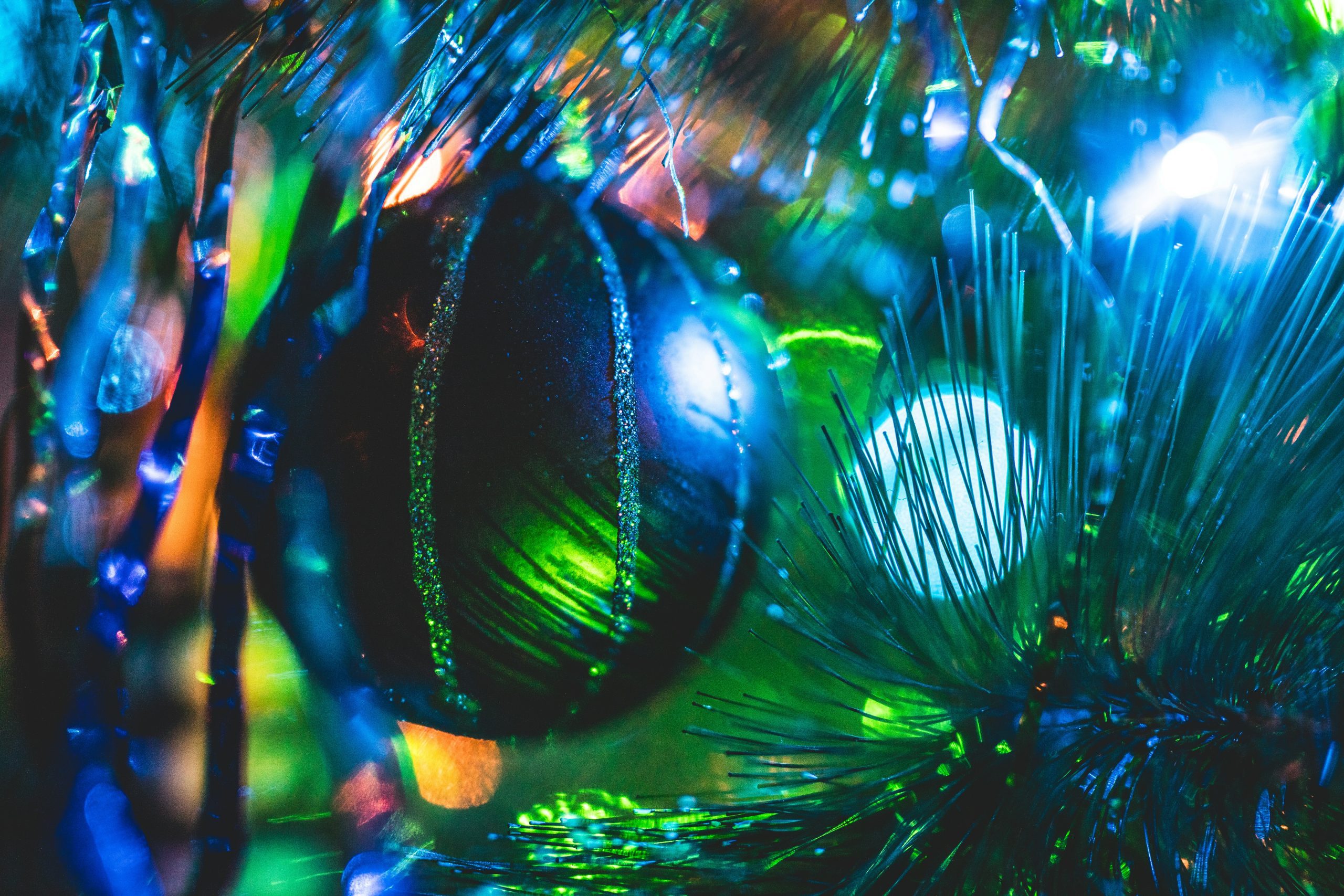
Photo by Alena Lavrova on Unsplash
DISCLAIMER
This article provides general information and does not constitute medical advice. Consult your healthcare provider for personalized recommendations. If symptoms persist, consult your doctor.