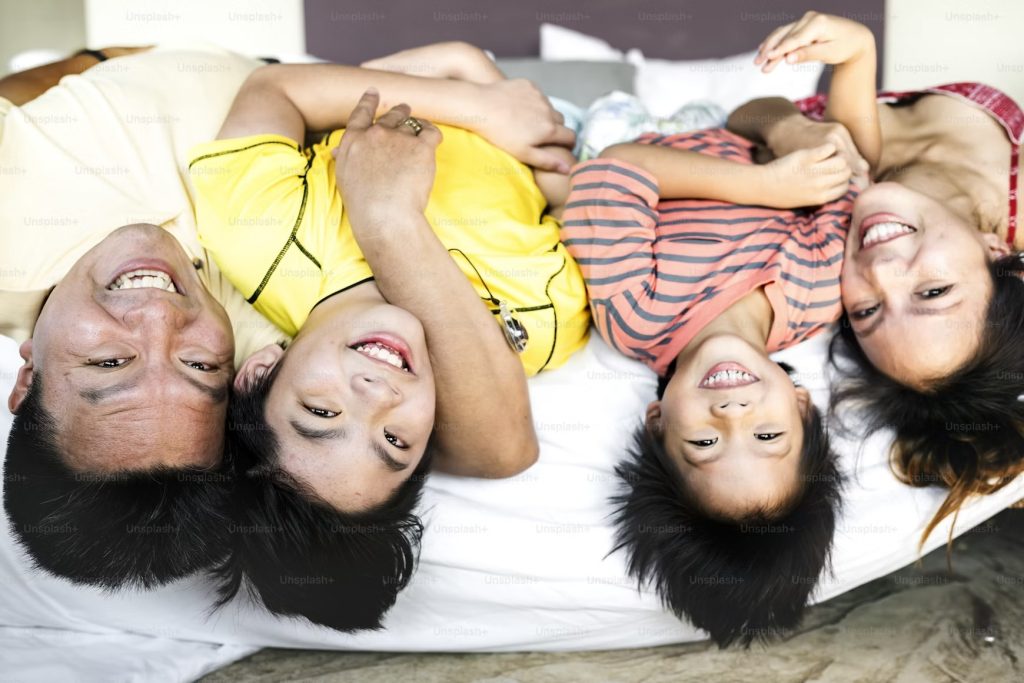
In the midst of economic pressures and recurring political uncertainty, Filipinos remain among the happier people in the world, according to the 2025 World Happiness Report, which ranked the country 57th globally with a life satisfaction score of 6.107 out of 10.
The Philippines is now the fourth happiest nation in Southeast Asia, behind Singapore, Vietnam, and Thailand. This comes after a dramatic leap in the 2024 rankings, when the Philippines rose 23 places to 53rd, the sharpest improvement worldwide.
Moreover, a separate Philippine Survey and Research Center–Gallup International poll in late 2024 also found that six in ten Filipinos considered themselves happy, placing the country ninth among 41 nations surveyed, well above the global average of 46 percent.
Experts say this resilience is driven by strong cultural anchors—family, faith, humor, and adaptability—even as economic uncertainty and political tensions pose ongoing challenges.
However, researchers caution that optimism is not unshakable. Gains in well-being can quickly erode under the weight of worsening inequality, climate shocks, and declining trust in institutions.
READ: How Releasing Old Stories Can Heal the Body and Renew the Self
Cultural Anchors of Happiness: Family and Faith
For many Filipinos, happiness is not measured by income or possessions but by close ties with loved ones.
A 2020 qualitative study of low-income families in Quezon City found that positive family relationships, children, faith in God, and good health were the strongest sources of joy, even amid hardship (Reyes et al., IAFOR Journal of Psychology & the Behavioral Sciences, 2020).
Furthermore, a 2021 study in the Journal of Family Psychology by Jocson and Garcia of Ateneo de Manila University showed that Filipino parents engaged in religious activities reported higher levels of hope and more positive parenting behaviors, linking spirituality with psychological well-being.
These findings reinforce long-standing values such as kapwa (shared identity) and pakikisama (harmonious cooperation), which foster belonging and resilience even in times of financial stress.
READ: Simple Joys, Big Impact — The 5-Minute Happiness Hack
Humor and Adaptability
Filipinos also rely on humor and the cultural mindset of bahala na—loosely translated as “come what may”—to confront uncertainty. While often criticized as fatalistic, psychologists argue it reflects courage and resourcefulness, allowing people to face adversity with determination (Pe-Pua & Protacio-Marcelino, Asian Journal of Social Psychology, 2000).
In fact, a 2024 study of jeepney drivers in Metro Manila found that those facing livelihood threats from transport modernization turned to bahala na as a coping mechanism, drawing strength from resilience and faith (Alamon et al., Philippine Sociological Review, 2024).
Meanwhile, humor became a lifeline during the pandemic. A 2023 analysis of Bisaya-language memes found that humor served as collective therapy, offering cognitive and emotional relief while raising awareness on health and financial challenges (Dela Cerna et al., Journal of Social Sciences and Humanities, 2023).
Similarly, a 2021 global study in Frontiers in Psychology confirmed that humor buffered anxiety and reinforced social connection during COVID-19 (Cann, Front Psychol, 2021). Together, these studies highlight how humor and adaptability remain essential cultural tools for Filipinos navigating uncertainty.
WRITE SOMETHING YOU ARE GRATEFUL FOR TODAY. IT WILL HELP TELL THE STORY OF YOUR YEAR.
Youthful Optimism vs. Economic Strain
The Philippines’ dramatic rise in the 2024 World Happiness rankings was partly fueled by optimism among its youth.
A nationwide study by the Philippine Survey and Research Center (PSRC) in partnership with Gallup International, the country posted a strong net optimism score of 40 percent, the highest in Asia, as students and young adults looked forward to a better 2025 with hopes of improving economic conditions and expanded opportunities.
Yet elevated expectations contrast sharply with ongoing economic pressures. Based on July 2025 data from the Philippine Statistics Authority (PSA), headline inflation dipped to a near six-year low of 0.9%, thanks in part to declining food prices, especially rice, offering relief for poorer households.
Still, concerns linger that rising living costs—particularly for utilities and transport—continue to outpace wage growth, squeezing household budgets.
Moreover, the Philippines remains among the world’s most disaster-prone nations. PAGASA reports that about 20 tropical cyclones enter the Philippine Area of Responsibility yearly, with 8–9 making landfall. In late 2024, powerful typhoons displaced nearly 9 million people nationwide, underscoring the fragility of hard-won optimism.
This juxtaposition, hopeful youth looking forward amid structural fragility, captures what analysts call the resilience-optimism paradox: Filipinos report soaring optimism and increasing life satisfaction, yet remain deeply vulnerable to external shocks like inflation, climate disasters, and political uncertainty.
The Numbers Beneath the Smiles — Civic Engagement Trends
The World Giving Report 2025 released by the Charities Aid Foundation (CAF) and the Association of Foundations (AF Philippines) shows that an impressive 75% of Filipinos donated money in 2024, surpassing both the global average of 64% and Asia’s average of 69% and placing the country 24th most charitable globally.
However, the same report also revealed that only 26% of Filipinos participated in formal volunteering last year—a notably low figure that aligns with global and regional patterns of modest civic involvement.
Globally, the World Happiness Report 2025 notes a subtle decline in formal acts of benevolence, including donating and volunteering, across most regions, even as informal helping behaviors remain elevated compared to pre-pandemic levels (2017-2019).
Taken together, these findings suggest that while informal generosity among Filipinos remains strong, through giving money directly to those in need or helping neighbors, the broader framework of civic engagement via formal channels may be weakening.
Voices from Experts
Jonathan Whitney, Head of Communications at Oxford’s Wellbeing Research Centre, observed that the Philippines’ remarkable 23-place rise in the 2024 World Happiness Report “signals how quickly optimism can rebound in societies with strong cultural anchors” (BusinessWorld, March 21, 2024).
Furthermore, A GMA News 2024 analysis noted that this surge in positivity was mainly driven by younger and upper-middle income Filipinos, but cautioned that “uncertainty is slowly creeping in, and a more cautious outlook is emerging among other groups.”
These observations align with long-standing Filipino cultural strengths such as kapwa and bayanihan. A June 2025 paper titled “On Kapwa: A Core Concept in Filipino Social Psychology” by Joefer Maninang (Bukidnon State University) emphasizes that kapwa, or shared identity, is foundational to interpersonal relationships and social resilience in Filipino psychology. The concept highlights unity and mutual recognition as essential to emotional well-being.
Similarly, a May 2025 study on organizational resilience (Filipino values such as bayanihan, pakikipagkapwa, utang na loob, and diskarte deeply influence how organizations operate and respond to adversity) underscores how bayanihan—the spirit of communal unity—and pakikipagkapwa support adaptive, community-centered responses to adversity.
Policy Implications: Sustaining Happiness
Experts agree that while culture sustains Filipino happiness, policy support is crucial to make optimism last.
- Strengthen Social Protection
Expanding healthcare access and social safety nets can reduce vulnerability to shocks. The Philippine Institute for Development Studies (PIDS) stresses that poverty reduction must go hand-in-hand with mental health programs, especially for youth and overseas Filipino workers who face unique emotional challenges. - Promote Civic Engagement
With volunteering rates in decline, civil society groups urge more support for community-based initiatives that rekindle bayanihan. New platforms—such as digital volunteerism and localized disaster response groups—can channel generosity into organized impact. - Boost Youth Participation
Since younger Filipinos drive much of the country’s optimism, education and employment opportunities must be expanded. The International Labour Organization (ILO) notes that youth unemployment in the Philippines remains higher than the regional average, threatening long-term well-being. - Climate and Disaster Preparedness
Happiness data consistently show that communities with strong disaster response systems maintain higher well-being scores. Investing in resilient infrastructure and climate adaptation could protect both lives and the optimism that sustains them.
Filipinos remain among the happiest people in the world—not because life is easy, but because cultural values anchor them through hardship. Family bonds, faith, humor, and adaptability continue to provide emotional safety nets that statistics cannot fully capture.
Yet resilience has limits. Rising inequality, climate vulnerability, and eroding institutional trust could chip away at optimism reflected in global surveys. The challenge for policymakers and communities is to transform cultural resilience into structural stability—ensuring happiness is not fleeting but sustainable.
As the 2025 World Happiness Report reminds us, the real measure of progress lies not just in GDP or political victories but in how ordinary people feel about their lives. For Filipinos, the smiles remain wide, but they also carry the weight of uncertainty.
Photo by Miguel Constantin Montes
DISCLAIMER
This article provides general information and does not constitute medical advice. Consult your healthcare provider for personalized recommendations. If symptoms persist, consult your doctor.