
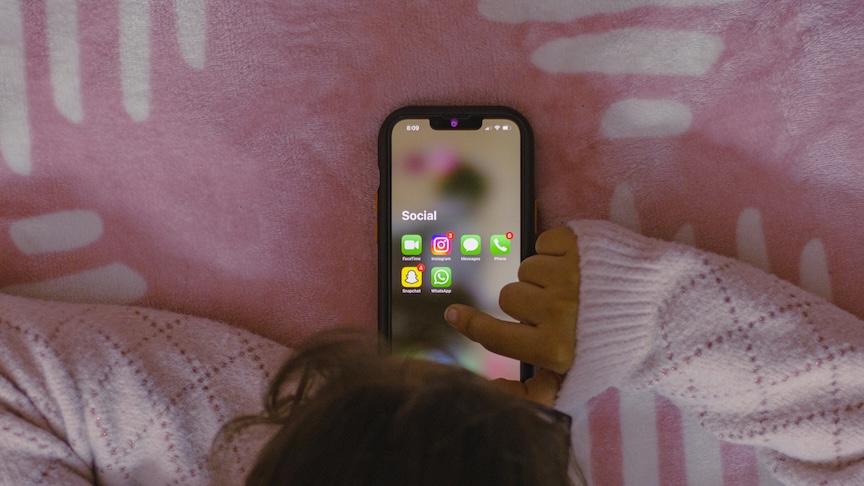
Before the sun rises, the screen does.
It glows beside the bed, patient and waiting. We reach for it before we reach for breath. Before prayer. Before coffee. And before the quiet awareness that we are alive again.
This is how the day begins now: not with prayer and reflection, but with updates.
In a pastoral letter dated February 13, 2026, the Catholic Bishops’ Conference of the Philippines, through +Gilbert A. Garcera, Archbishop of Lipa, invited the faithful to observe a different kind of Lenten discipline — not only fasting from food, but fasting from the digital noise that weakens interior life.
It is a gentle suggestion. It feels almost radical.
Because what would remain if we were not constantly plugged in?
Doomscrolling is the word we’ve given to the habit of endless consumption — headlines, outrage, commentary, curated perfection, catastrophe after catastrophe after catastrophe. Psychologists describe how this constant exposure keeps the nervous system on alert. The brain, wired for survival, does not distinguish well between digital threat and physical danger. Cortisol rises. Attention fragments. Sleep erodes.
We call it staying informed.
But often, we are simply staying stimulated.
Technology has empowered us — this is true. It has democratized voice, shortened distance, accelerated work. Yet it has also trained us to measure our worth in metrics: likes, views, shares, insights, reach. We wake up and immediately check how we are performing.
READ: Is ‘Brain Rot’ Real? Understanding the Impact of Excessive Internet Use
Competing before we are even conscious.
Where, then, is wellness?
Not in the scroll. Nor in the rush of breaking news. And definitely not in the subtle panic of being left behind.
Wellness may be in the pause we resist.
The Church’s call to digital fasting during Lent is not an attack on modernity. It is an invitation to attention. To choose what we allow to enter the mind. To rediscover what silence sounds like.
Interior silence is not emptiness. It is space. Space for introspection. Space for relationship. And space for the slow recognition of God in ordinary hours.
When the glare of the screen becomes constant, relationships thin. We sit beside one another but live elsewhere. Meals are photographed before they are tasted. Conversations are interrupted by vibrations. Even prayer competes with notifications.
We begin to live outwardly, rarely inward.
And yet the deepest movements of the soul happen in quiet. Insight does not shout. Conscience does not trend. Peace does not go viral.
To fast digitally, even briefly, is to reclaim sovereignty over attention. It is to say that our interior life deserves protection. That our minds are not marketplaces. That our spirits are not algorithms.
We are not asked to abandon technology. Only to master it.
Perhaps this Lent, the invitation is simple: wake up without reaching. Sit before scrolling. Walk without documenting. Listen without dividing attention.
And if, in that stillness, something unfamiliar emerges — restlessness, boredom, even discomfort — stay.
There is something beneath the noise that has been waiting.
Joyful Wellness quietly echoes this call: step back from the glare so you may see more clearly. Withdraw from the rush so you may return to yourself. Rediscover the kind of presence that no screen can simulate.
The scroll will still be there.
The question is whether we will.
Photo by Sanket Mishra on Unsplash
References & Sources
- Catholic Bishops’ Conference of the Philippines (CBCP). (2026). Pastoral Letter on Digital Fasting for Lent. February 13, 2026.
— Official statement encouraging digital fasting and interior renewal. - Montag, C., & Walla, P. (2016). Carpe diem instead of losing your social mind: Beyond digital addiction. Neuroscience & Biobehavioral Reviews.
— On how digital overuse affects brain reward systems and attention. - Alter, A. (2017). Irresistible: The Rise of Addictive Technology and the Business of Keeping Us Hooked.
— Explains the psychology behind endless scrolling and behavioral design. - Twenge, J. M., et al. (2018). Increases in depressive symptoms and suicide-related outcomes linked to screen time. Clinical Psychological Science.
— Research linking excessive screen engagement and mental health concerns among youth. - World Health Organization (WHO). (2022). Mental Health and Well-being Guidelines.
— On stress regulation, overstimulation, and preventive mental health practices.